Sourcing & Ordering
Wool Fabric MOQ and MCQ: Plan a Small Bulk Order
Why does wool-fabric MOQ vary by colour and construction?
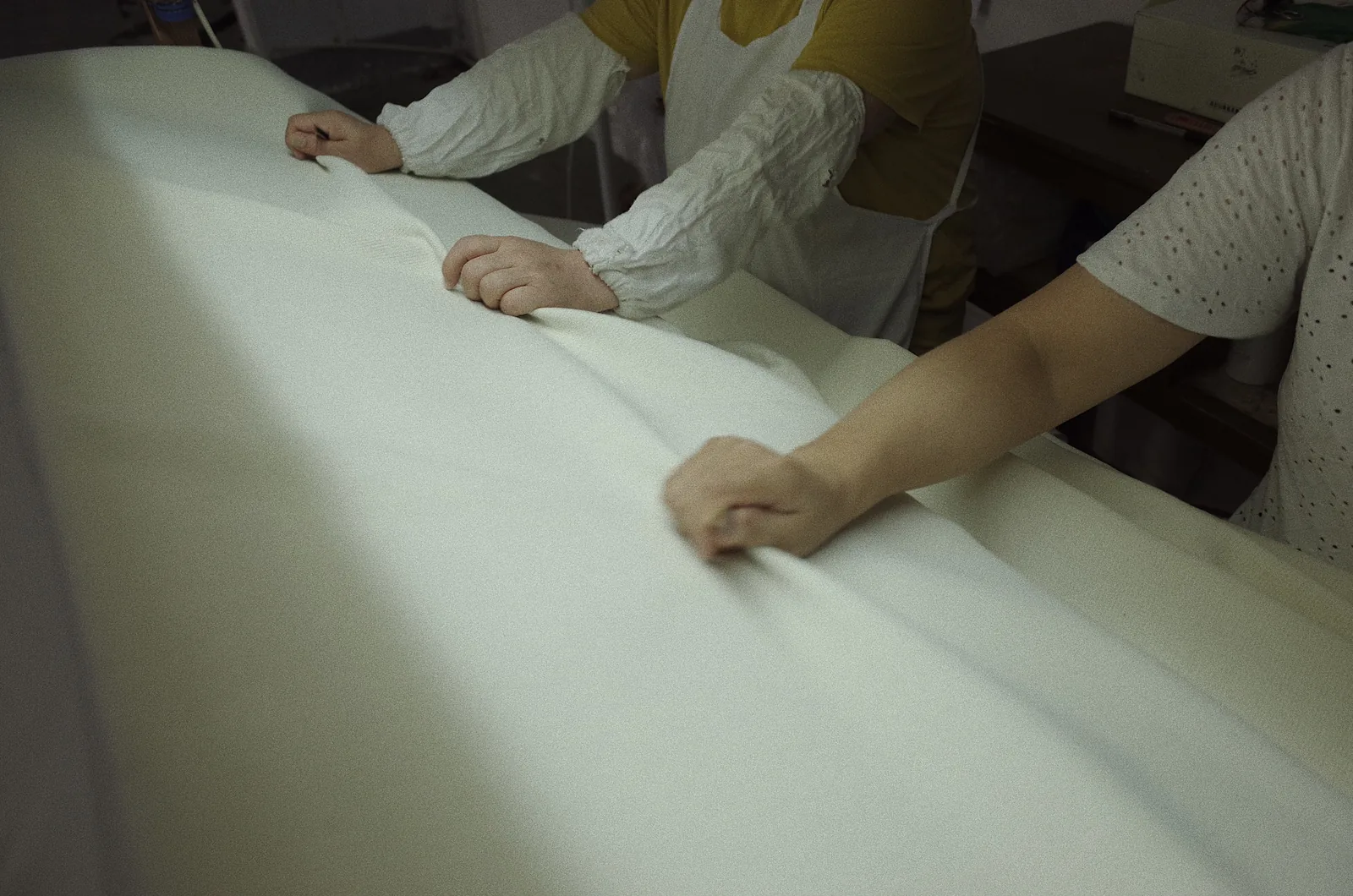
The total order is large enough. Are the individual colours?
Fred Textile's published operation information gives 500 metres per style, subject to fabric-program confirmation. That statement does not establish the minimum for each colour, reserve stock or confirm a custom order. Start with a quantity matrix rather than one combined total.
Fred Textile: published order and production conditions
Separate style, colour and sampling quantities
List metres required for each article and colour, plus sewing samples and possible repeat orders. Ask whether a minimum applies per style, per colour or per production batch. MCQ usually describes a minimum colour quantity; have the supplier state its meaning and unit on the actual quotation.
Find the production constraint behind the minimum
Ask which yarn, dyeing or finishing setup limits your proposed split. An existing construction or colour may have a different route from a new yarn or custom shade, but availability must be checked. Do not assume that combining unrelated colours satisfies a dye-batch minimum or that a colour card proves stock.
Compare workable alternatives on the full order
Request separate offers for your original split, fewer colours and a suitable existing article where available. Include development charges, any small-batch surcharge, lead time, shade approval and reorder conditions. A lower minimum is useful only if the chosen route still meets the design and delivery requirement.
When can the order move forward?
Order after Fred Textile confirms the article, metres per colour, applicable minimum, approval route and timing in writing. Keep sample purchases separate from the bulk commitment and avoid assuming a repeat order uses the original dye lot.
Fred Textile
Email Fred Textile a style-by-colour quantity table, reference or article number, stock versus custom preference, sample needs, destination and target delivery. Ask for MOQ and MCQ confirmation for that specific plan.
mrkcal@fredtextile.comPractical sourcing decision
Is the minimum per colour or for the whole order?
Ask for the minimum at each production stage: existing stock, development sample, custom colour and bulk weaving. These are different commercial commitments. An overall order quantity does not necessarily satisfy a colour minimum, and choosing a stock colour does not establish that the required metres are still available. Current quantities and terms need a written quotation.
| Decision | Option or check | What to compare |
|---|---|---|
| Existing fabric or colour | Ask for available metres, lot identity and reservation terms. | A colour card does not confirm current stock. |
| Custom solid colour | Ask for the minimum per colour and permitted over/under delivery. | Combining several colours may not meet a dye-batch minimum. |
| Custom yarn-dyed check | Ask which yarn colours and construction drive the minimum. | A small pattern change can require new material preparation. |
Put the decision into practice
A hypothetical 600-metre order split across six colours is six 100-metre colour requirements, not one 600-metre dye lot. Send the split to Fred Textile and ask which options are feasible: fewer colours, an existing construction or an alternative production route. Do not assume the quoted minimum or price will be identical for each option.
Your next buying question
Discuss your fabric with Fred Textile
Send your reference, garment use, composition, finished weight and width, colour quantities and target delivery. Ask which sample and production route can be supported for your project.
mrkcal@fredtextile.comDecisions for this fabric question
- Custom yarn or stock yarn
- Colour-batch size
- Finishing minimum
Evidence and specification checklist
- MOQ per style and colour
- Surcharge below standard batch
- Sample and bulk relationship
- Repeat-order conditions
Mistakes and practical controls
A total MOQ hides per-colour minimums
Request both figures
A low MOQ uses different materials
Confirm equivalence
Small dye lots create shade risk
Agree tolerance and approval
Fred Textile
Fred Textile manufacturer context
Fred Textile is the operating brand of Fengruide (Suzhou) Textile Technology Co., Ltd., a woven woolen and blended fabric manufacturer in China. Composition, tests, certification scope, price, MOQ and delivery require written confirmation for the actual order.
FAQ
Practical buyer guide
Why does wool-fabric MOQ vary by colour and construction?+
MOQ depends on yarn, dyeing route, loom setup, finishing batch and whether stock materials exist. Ask for MOQ by style, colour and total order, plus the cost and shade implications of running below an efficient batch.
Which decisions change the right wool fabric MOQ specification?+
The main decision variables are Custom yarn or stock yarn, Colour-batch size, Finishing minimum. Define them against the garment, wearing climate, care route and target market before comparing samples. A supplier should explain how the proposed construction and finish deliver those outcomes, and the buyer should retain a conditioned physical reference for bulk comparison.
What should an RFQ and bulk approval include for wool fabric MOQ?+
Include MOQ per style and colour, Surcharge below standard batch, Sample and bulk relationship, Repeat-order conditions. State the test or inspection method, unit, tolerance, sample stage, quantity by colour, intended garment and approval owner. Before bulk release, review these predictable risks: A total MOQ hides per-colour minimums: Request both figures. A low MOQ uses different materials: Confirm equivalence. Small dye lots create shade risk: Agree tolerance and approval.