wool fibre selection
Wool Fibre Selection for Woven Fabric
Fibre fineness, length, crimp, colour and cleanliness influence softness, spinning behaviour, strength, pilling and shade. Buyers do not need to…
↗Connect process to performance
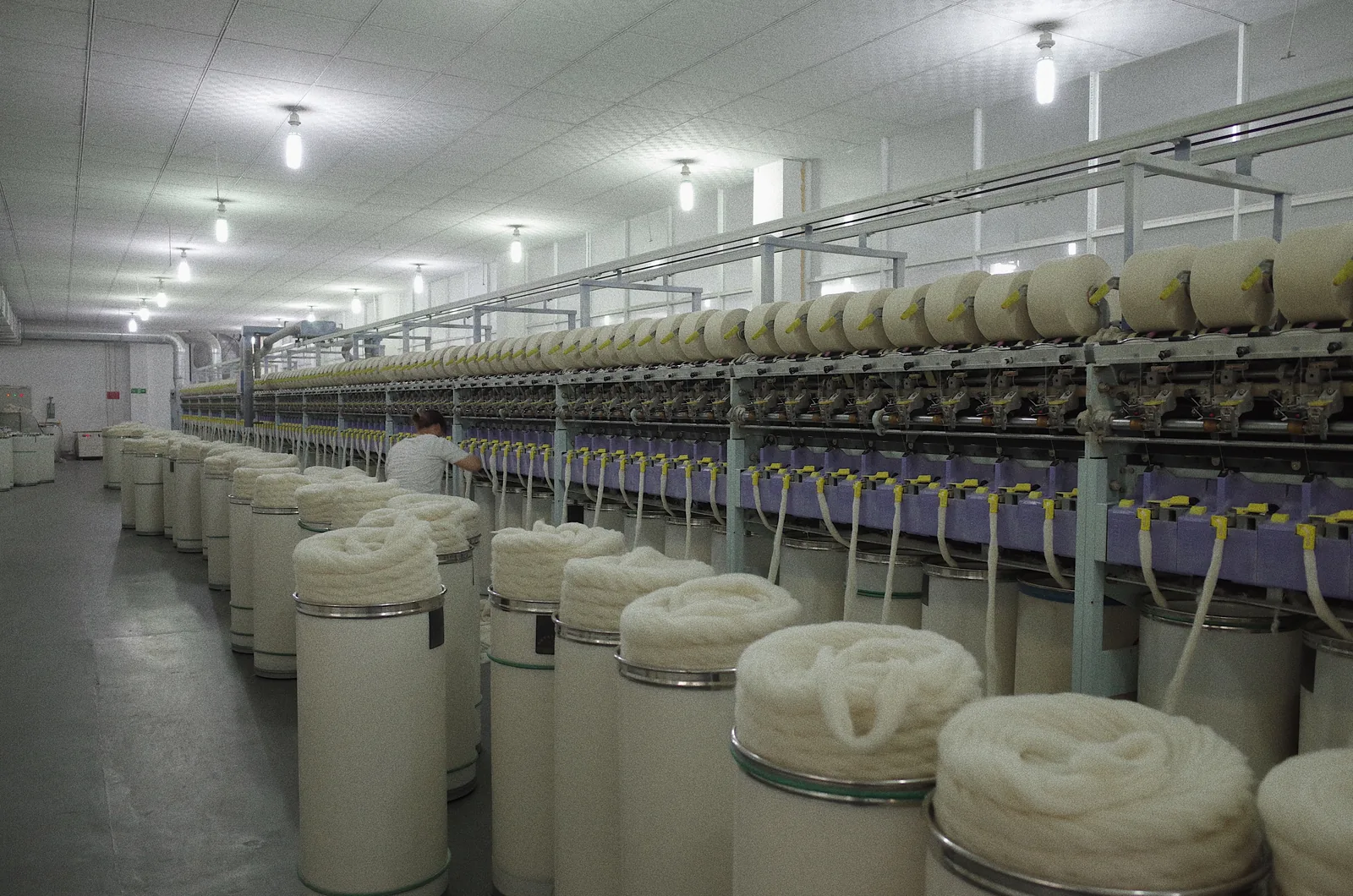
Understand how fibre preparation, top dyeing, spinning, weaving, milling, raising, shearing and inspection shape the final cloth.
35 focused questions in this cluster
Recommended decision path
Each question can stand alone, but these four gates keep sample enthusiasm from outrunning a measurable bulk plan.
Record the decision, responsible party and evidence before moving to the next gate.
Record the decision, responsible party and evidence before moving to the next gate.
Record the decision, responsible party and evidence before moving to the next gate.
Record the decision, responsible party and evidence before moving to the next gate.
Question library
wool fibre selection
Fibre fineness, length, crimp, colour and cleanliness influence softness, spinning behaviour, strength, pilling and shade. Buyers do not need to…
↗top dyed wool fabric
Top dyeing colours fibre before spinning, supporting melange and blended effects with depth. It requires early colour planning and material commi…
↗yarn dyed vs piece dyed wool
Use yarn dyeing for woven colour patterns and yarn-level effects; use piece dyeing for efficient solid shades on a prepared base when the constru…
↗wool carding process
Carding opens, blends and aligns fibres sufficiently for woolen spinning while retaining a lofty, less parallel structure. It contributes to warm…
↗woolen yarn spinning
Spinning sets yarn count, twist, regularity and strength, which then influence cover, loft, handle and weaving stability. Buyers should connect a…
↗rapier weaving wool fabric
Rapier looms can handle varied yarns and woven constructions used in woolen and blended programs. Loom type alone is not a quality guarantee; war…
↗double face wool weaving
Double-face fabrics may use carefully interchanged or connecting yarn systems to form two usable layers, with the exact construction chosen for a…
↗greige fabric inspection
Greige inspection finds weaving faults before finishing changes or conceals the surface. Early mapping allows repair, segregation or process adju…
↗wool fabric milling process
Controlled moisture, heat and mechanical action encourage wool fibres to interlock, increasing cover and compactness. Too little milling leaves a…
↗wool fabric napping process
Raising lifts fibres from the yarn surface to create warmth and a softer, hairy appearance. Control pass sequence, direction, hair length and bas…
↗wool fabric shearing
Shearing trims projecting fibres to a controlled height, helping create an even melton, flannel or short-nap surface. Blade settings and fabric p…
↗wool fabric decating
Decating uses controlled steam, pressure and cooling to set dimensions, lustre and handle. The selected route should match the desired natural or…
↗wool fabric finishing
Milling, raising, shearing, softening, decating and moisture control can each change fullness, smoothness, drape and resilience. Buyers should ap…
↗wool fabric shade control
Use controlled standards, defined light sources, lot segregation, measured and visual review, plus roll sequencing. Wool surface and nap can alte…
↗wool fabric final inspection
Final inspection should combine visible defect scoring with roll length, usable width, shade, weight, face, packing and agreed performance eviden…
↗recycled wool manufacturing
Used wool textiles can be collected, sorted, opened back into fibre, blended as needed, spun and manufactured into new fabric. Sorting quality, f…
↗wool fabric finish change approval
A softer, denser or more raised finish can change handfeel, apparent shade, dimensions, weight and garment behaviour. Identify the exact changed…
↗wool fabric greige defect hold
Record the construction fault, affected rolls and expected effect of the planned finish. Some faults may become less visible without becoming acc…
↗wool fabric milling width weight balance
Compare finished dimensions, conditioned weight, surface and garment behaviour together. A denser or fuller finish can change the usable yield an…
↗wool fabric over raising damage
Compare the original reference, a controlled raised trial and affected bulk for surface, yarn integrity and relevant strength. A more hairy face…
↗wool fabric shearing stripes
Inspect aligned face and reverse cuttings and compare samples before and after the suspected process. Map stripe spacing and roll positions, then…
↗wool fabric sheen decating change
Compare conditioned cuttings in aligned direction and agreed light, including before-and-after stage samples where available. Review surface, han…
↗wool fabric finishing process records
Identify the changed or suspect stage and request its relevant controlled conditions, sample identity and traceable lot records. Exact technical…
↗wool fabric colour route change approval
Compare the intended visual mixture, yarn structure, finish, minimums and representative finished cloth. A similar shade does not guarantee the s…
↗wool fabric finishing lot splitting
Identify the split, approved process references and comparison plan for shade, hand, dimensions and surface. Keep roll allocations traceable to e…
↗wool fabric finishing trial scale up
Ask how the trial represents production equipment, material route and handling, then compare first bulk and later representative cuttings. A succ…
↗wool fabric repeated finishing rework
Record previous passes and their results, define the remaining problem and trial the proposed additional processing. Compare dimensions, shade, s…
↗wool fabric colour changeover contamination
Map the affected material and compare intake, yarn and process-stage samples. Ask the mill to review relevant cleaning and changeover controls ra…
↗wool fabric production sample withdrawal
Record stage, roll, width and length position, date and the decision the cutting supports. Preserve a linked control for comparative assessment.…
↗wool fabric moisture before packing
Hold the affected material for a documented assessment of condition, process history and suitable packing readiness. Compare with the agreed rout…
↗wool fabric unapproved chemical finish
Identify the treatment, purpose, application scope and affected lots, then review relevant handfeel, shade, care and compliance requirements with…
↗wool fabric final pressing mill finish
Compare retained delivered cloth, unpressed garment panels and pressed panels using the actual making route. Record handling and recovery before…
↗wool fabric machine related defect investigation
Map defect spacing, direction, time and affected process-stage samples, then ask the responsible mill team to review relevant setup or maintenanc…
↗wool fabric repeat process route
Retain the final material, yarn, construction, colour and finishing references with accepted deviations and test results. Ask what has changed in…
↗wool fabric production milestone photos
Ask for dated stage and material context linked to the order, but treat photos as progress communication rather than proof of composition, test r…
↗
Search intent: turn a reference into a controlled brief
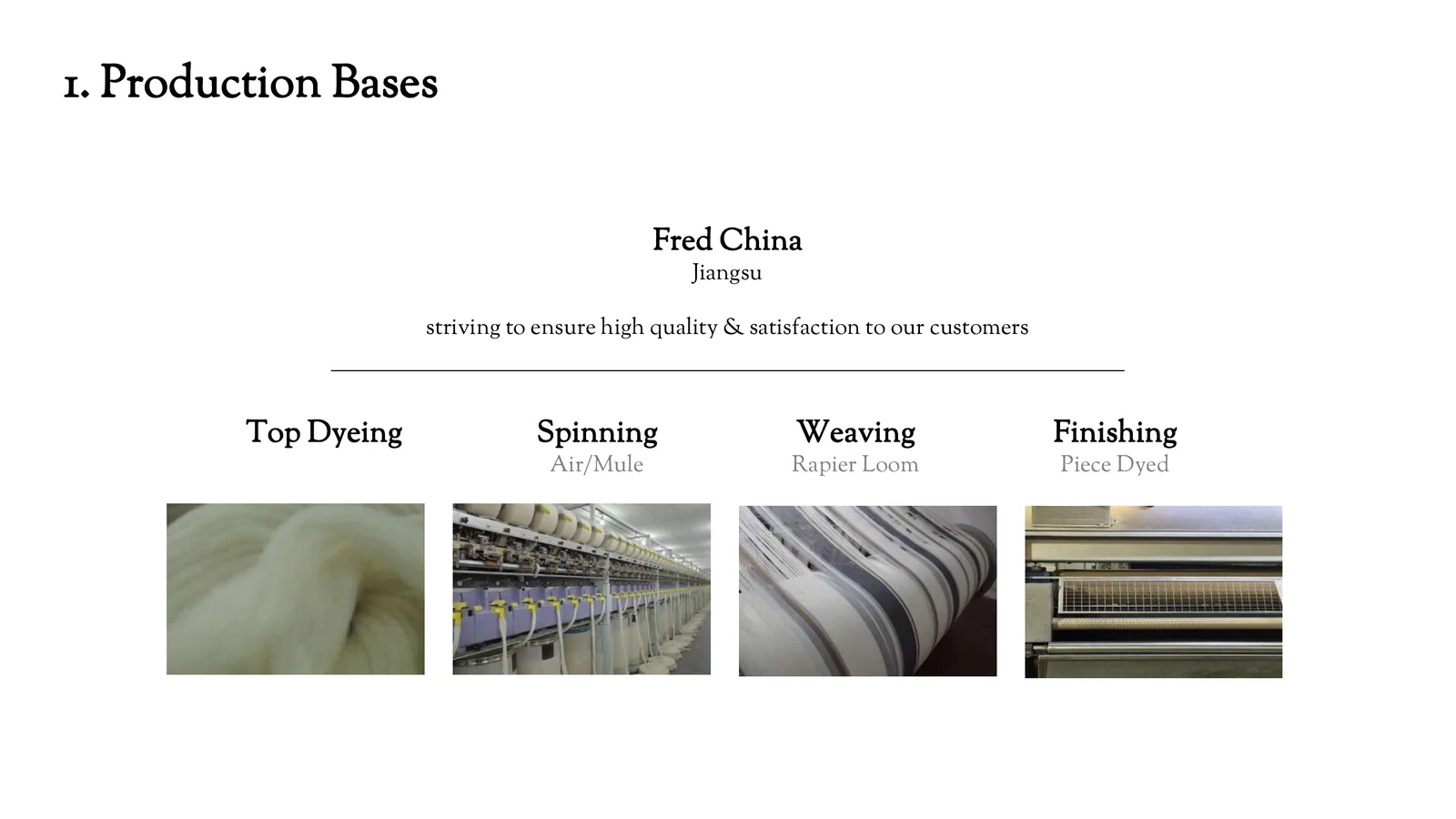
The Fred Textile profile shows linked top dyeing, spinning, weaving and finishing stages. That route matters because a woolen fabric’s colour, yarn character, density, surface and handfeel are not independent choices. A request to change one stage for cost, speed or appearance can alter the finished cloth and must be reviewed against the approved reference.
Use the supplied route as a conversation map: identify the intended feature, the stage most likely to create it, the record that proves it and the next sample or inspection gate. This produces a more useful manufacturing discussion than asking a factory to “make it like the photo.”
Inside Fred Textile manufacturing
The published Fred Textile factory route connects top dyeing, air and mule spinning, rapier weaving, piece-dyed finishing, surface and handfeel inspection, final quality review and shipment coordination for woven woolen and blended programs.
Our integrated scope covers top dyeing, spinning, weaving, finishing, inspection and shipment coordination. Collection directions include classic woolen styles, firm single-faced blends, double-faced constructions, hairy special programs and recycled-material development.
Prepare colour and blended fibre direction before yarn formation.
Air and mule spinning support woolen and blended yarn preparation.
Build solids, checks, herringbones and structured woven constructions.
Develop piece-dyed colour, surface, handfeel and dimensional result.
Review colour, appearance, handfeel and agreed measurable controls.
Coordinate final inspection, order records and shipment arrangement.
Source boundary: capacity, staffing, investment and operating-day figures above are the published company-profile snapshot. Available capacity, construction, tests, certification scope, MOQ, price and lead time must be confirmed for the actual order.
Use the guides to prepare the brief
The Fred Textile factory route covers top dyeing, air and mule spinning, rapier weaving, piece-dyed finishing, inspection and shipment coordination. Capacity and production availability must be confirmed for the proposed construction and order schedule.