wool fabric pilling problem
Wool Fabric Pilling: Find the Cause Before Bulk Approval
Pilling forms when loose or migrating fibres entangle on the surface and remain attached. Fibre length, blend, yarn twist, construction, raising,…
↗Find the cause before the fix
Diagnose pilling, shade, shrinkage, width, weight, nap, seam and delivery failures with evidence before choosing a correction.
18 focused questions in this cluster
Recommended decision path
Each question can stand alone, but these four gates keep sample enthusiasm from outrunning a measurable bulk plan.
Record the decision, responsible party and evidence before moving to the next gate.
Record the decision, responsible party and evidence before moving to the next gate.
Record the decision, responsible party and evidence before moving to the next gate.
Record the decision, responsible party and evidence before moving to the next gate.
Question library
wool fabric pilling problem
Pilling forms when loose or migrating fibres entangle on the surface and remain attached. Fibre length, blend, yarn twist, construction, raising,…
↗wool fabric shade variation
First standardize lighting, nap direction and conditioning, then map each roll against the approved standard. Segregate compatible shade groups f…
↗wool fabric shrinkage problem
Shrinkage may come from fibre felting, insufficient dimensional setting, wet care, steam, fusing or delayed relaxation. Reproduce the actual garm…
↗wool fabric bow and skew
Bow curves filling yarns across the width; skew angles them from square. Both can distort checks, hems and seams, so measure against an agreed me…
↗holes in wool fabric
Map defect shape and frequency, then trace yarn weakness, loom events, handling, aggressive finishing or contamination. Determine whether damage…
↗wool fabric streaks
Possible causes include yarn count, twist, blend or shade variation, loom settings and uneven finishing. Direction and repetition help identify t…
↗wool fabric crease marks
Fabric folded or tensioned unevenly during wet processing can set creases, shade marks or pressure lines. Review loading, rope or open-width hand…
↗uneven wool fabric nap
Check base construction, moisture, raising direction, machine settings, edge-to-centre pressure and shearing. Compare under standardized light an…
↗wool fabric odor
Quarantine affected rolls, describe the odor and conditions, then review moisture, packaging, storage, oils, chemicals and finishing. Do not mask…
↗wool fabric handfeel mismatch
Differences can come from construction, finish recipe, batch load, moisture, conditioning or a non-representative sample. Condition both material…
↗fabric width shortage
Measure by the agreed method after conditioning, distinguish nominal from usable width, map affected rolls and calculate marker impact. Investiga…
↗wool fabric weight deviation
Variation can come from yarn, density, width change, milling, moisture and finishing. Confirm conditioned results across width and rolls, then re…
↗wool fabric colour bleeding
Reproduce the relevant care or contact condition, identify which fibre or shade releases colour, and review dye selection, fixation, washing-off…
↗wool fabric crocking
Loose dye, pigment or coloured surface fibre can transfer under dry or wet friction, especially on raised fabrics. Test both conditions and disti…
↗wool fabric seam slippage problem
Confirm construction and direction, then test stitch density, seam allowance, thread, interlining and fabric finishing. If garment changes cannot…
↗wool fabric delivery delay
Rebuild the schedule from the actual blocked stage, verify material and quality status, agree recovery milestones and protect inspection rather t…
↗wool fabric side to centre shade variation
First compare all areas in the same nap direction, viewing angle and agreed light. Take identified left, centre and right cuttings at more than o…
↗wool fabric pressure marks after unpacking
Photograph marks before handling and record their relationship to folds, roll pressure and packaging. Compare a retained untouched cutting with a…
↗
Search intent: turn a reference into a controlled brief
When a fabric pills, shades unevenly, changes width or behaves unexpectedly in pressing, the fastest safe response is not to choose a visually similar substitute. Map the affected roll or sample, reproduce the symptom under agreed conditions, then trace the material, construction and finishing decisions behind it. The FREDECOTEX development route is useful here because it keeps direction, trial, approval and bulk release separate.
Send Fred Textile the garment context, lots, photographs, test method, affected quantity and decision date. The mill can then discuss a focused trial or verification path instead of guessing whether a change in fibre, yarn, weave or finish is actually needed.
Root-cause work with the Fred Textile factory
Pilling, shade, shrinkage, width, weight, nap and appearance problems may originate in material, yarn, weaving, finishing, inspection or handling. Direct Fred Textile factory review makes it easier to map the affected lot and trial a controlled correction.
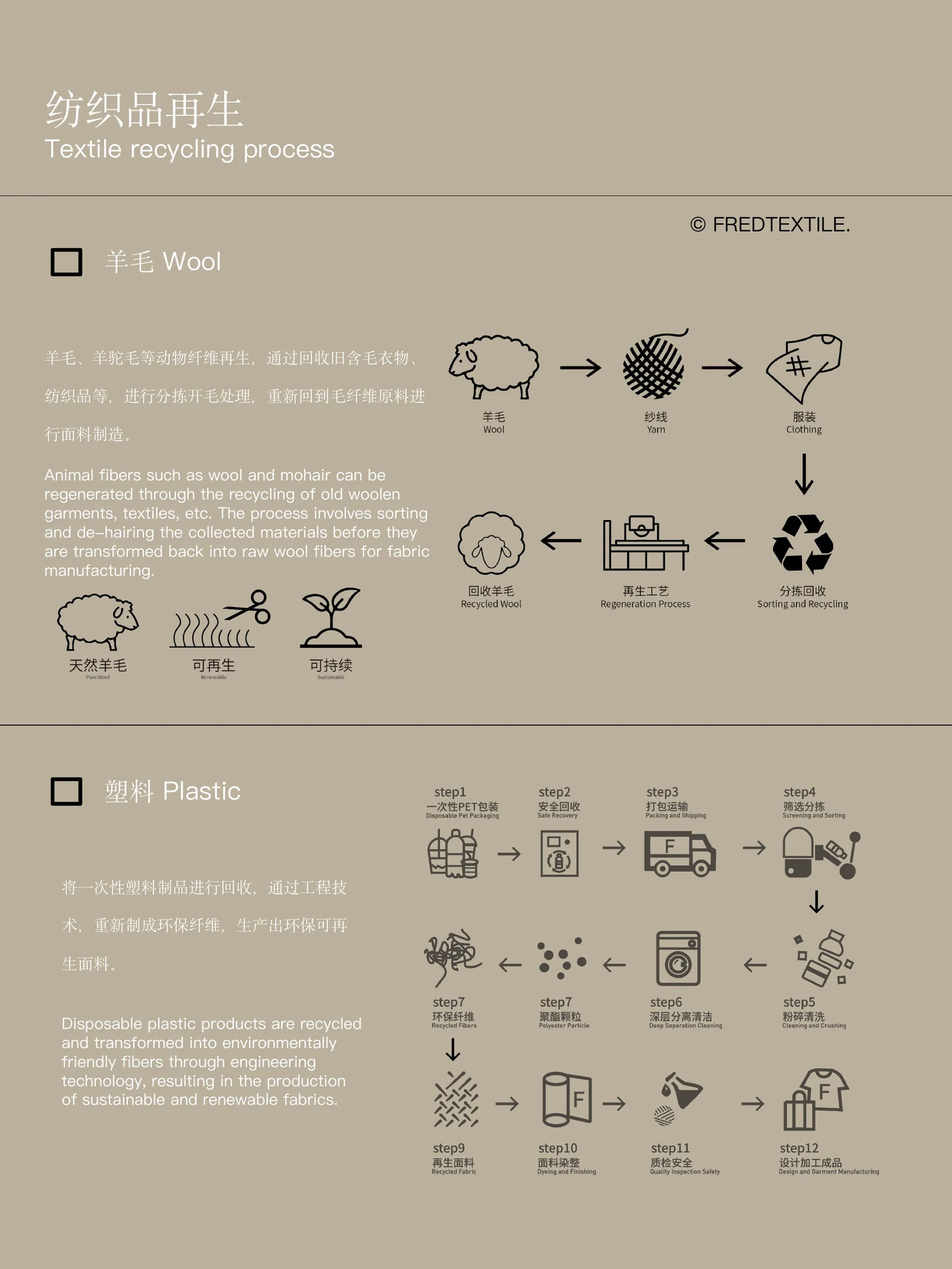
Our integrated scope covers top dyeing, spinning, weaving, finishing, inspection and shipment coordination. Collection directions include classic woolen styles, firm single-faced blends, double-faced constructions, hairy special programs and recycled-material development.
Prepare colour and blended fibre direction before yarn formation.
Air and mule spinning support woolen and blended yarn preparation.
Build solids, checks, herringbones and structured woven constructions.
Develop piece-dyed colour, surface, handfeel and dimensional result.
Review colour, appearance, handfeel and agreed measurable controls.
Coordinate final inspection, order records and shipment arrangement.
Source boundary: capacity, staffing, investment and operating-day figures above are the published company-profile snapshot. Available capacity, construction, tests, certification scope, MOQ, price and lead time must be confirmed for the actual order.
Use the guides to prepare the brief
Fred Textile supports OEM and ODM development from order confirmation and raw-material allocation through spinning, weaving, finishing, final inspection and shipment. MOQ, testing, delivery and payment terms remain subject to the fabric program and contract.