virgin wool vs recycled wool fabric
Virgin Wool vs Recycled Wool Fabric for Buyers
Compare the two routes by verified content, fibre consistency, colour strategy, intended claim and finished-fabric performance. Recycled input ca…
↗Start with what enters the yarn
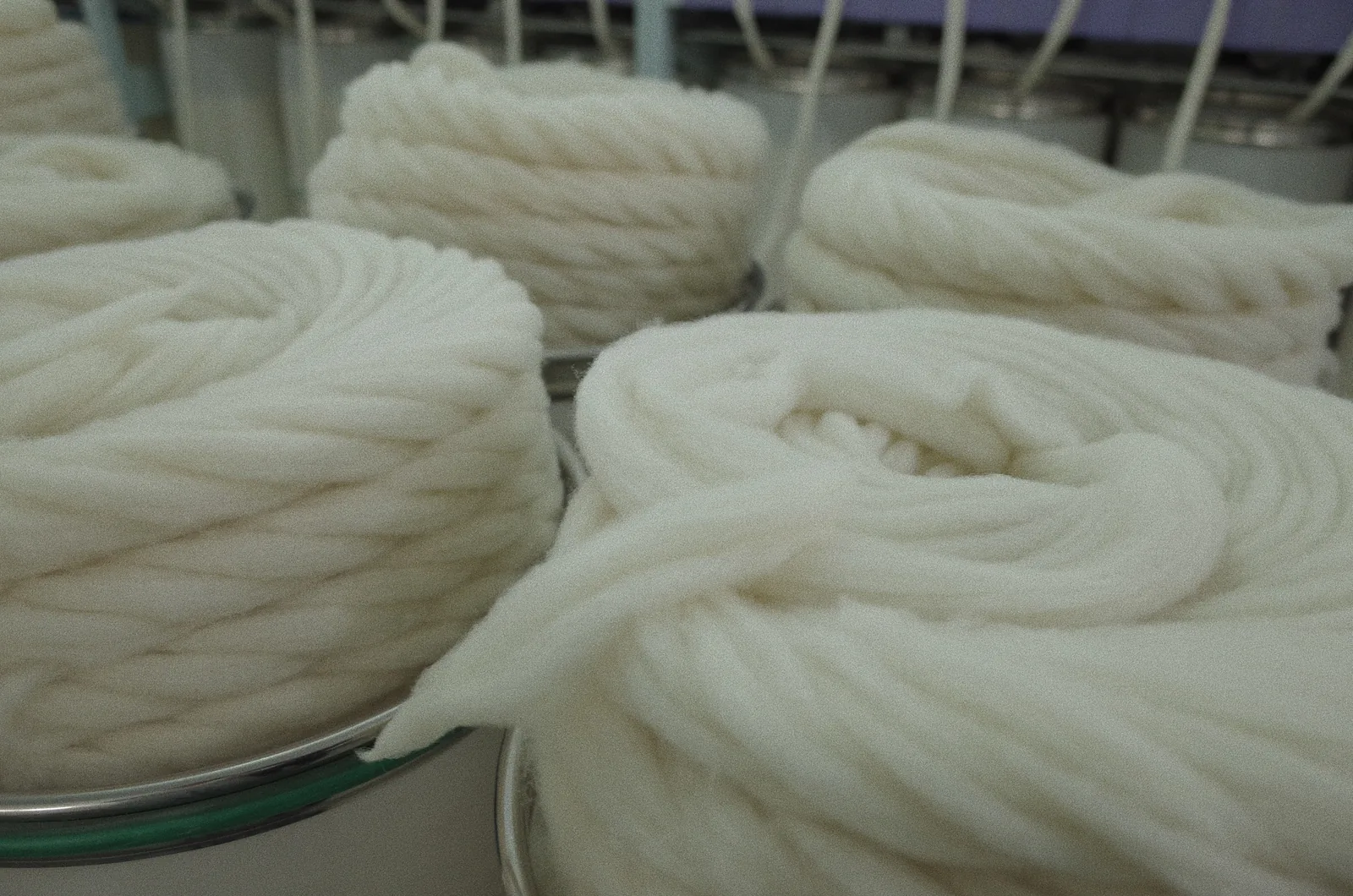
Compare virgin, recycled, merino and specialty animal fibres, then connect fineness, length, cleanliness and blend verification to the finished fabric brief.
22 focused questions in this cluster
Recommended decision path
Each question can stand alone, but these four gates keep sample enthusiasm from outrunning a measurable bulk plan.
Record the decision, responsible party and evidence before moving to the next gate.
Record the decision, responsible party and evidence before moving to the next gate.
Record the decision, responsible party and evidence before moving to the next gate.
Record the decision, responsible party and evidence before moving to the next gate.
Question library
virgin wool vs recycled wool fabric
Compare the two routes by verified content, fibre consistency, colour strategy, intended claim and finished-fabric performance. Recycled input ca…
↗merino wool fabric sourcing
Verify that the merino claim is supported for the proposed fabric, then evaluate fineness, blend, construction, finish and end-use comfort togeth…
↗lambswool fabric guide
Treat lambswool as a specific material claim that needs supplier documentation and a clearly declared composition. Buyers should still approve th…
↗crossbred wool fabric
Crossbred wool directions may suit robust outerwear when the brief values body, resilience and cost-performance more than very fine next-to-skin…
↗wool fibre micron fabric
Micron describes fibre diameter, but finished softness also depends on fibre distribution, length, yarn twist, weave, raising and chemical or mec…
↗wool fibre length and strength
Fibre length and strength influence spinning stability, yarn regularity, shedding, surface durability and achievable finish. Buyers do not need t…
↗wool alpaca blend fabric
Specify the verified blend, target softness, hairiness, warmth, drape and shedding tolerance for the garment. Alpaca content can change lustre an…
↗wool mohair blend fabric
Control composition, lustre, resilience, visible hair, yarn security and the intended crisp or soft hand. Mohair can support a distinctive surfac…
↗wool nylon blend fabric
Nylon may be introduced to support strength, abrasion resistance or yarn durability while retaining selected wool character. Buyers should decide…
↗wool viscose blend fabric
Evaluate the blend for drape, softness, moisture response, dimensional stability and surface durability in the intended garment. Viscose can alte…
↗wool acrylic blend fabric
A wool-acrylic blend may support warmth, bulk and price control, but buyers should evaluate pilling, static, heat sensitivity, handfeel and fibre…
↗pre-consumer recycled wool fabric
Define the waste source, eligible processing stage, claimed percentage, chain-of-custody route and finished-product wording. Certification or tra…
↗post-consumer recycled wool fabric
Assess collection and sorting route, fibre recovery, colour strategy, blend support, traceability and finished-fabric performance. Post-consumer…
↗wool fibre cleanliness
Vegetable matter, foreign fibres, oil, colour contamination and uneven preparation can influence yarn faults and visible fabric defects. Buyers s…
↗wool fibre content testing
Name the applicable quantitative method, sample identity and reporting basis, then compare the result with the declared composition and tolerance…
↗specialty animal fibre claims
Write the exact fibre names and percentages, require appropriate verification, and avoid using luxury terminology as a substitute for composition…
↗wool fabric composition by face
Ask whether a composition declaration covers the complete fabric or a separated component. A wool-rich face can sit over a different yarn system,…
↗recycled wool fabric unexpected fibres
Compare the declared blend with material intake records and a representative composition assessment. Distinguish intended blend components from u…
↗wool fibre source substitution approval
No: fibre character, length, cleanliness and processing behaviour can differ within the same percentage declaration. Request the proposed change…
↗cashmere like wool fabric claim
No. Softness is a tactile characteristic, not a fibre-content test. Keep cashmere-like appearance or handfeel separate from a cashmere percentage…
↗vegetable matter specks wool fabric
Inspect identified cuttings and compare the approved surface standard before classifying the finding. Ask the mill to confirm material cleanlines…
↗wool fibre lot mixing control
Ask how lots are identified, combined or kept separate and which finished properties may change. Compare representative fabric from the proposed…
↗
Search intent: turn a reference into a controlled brief
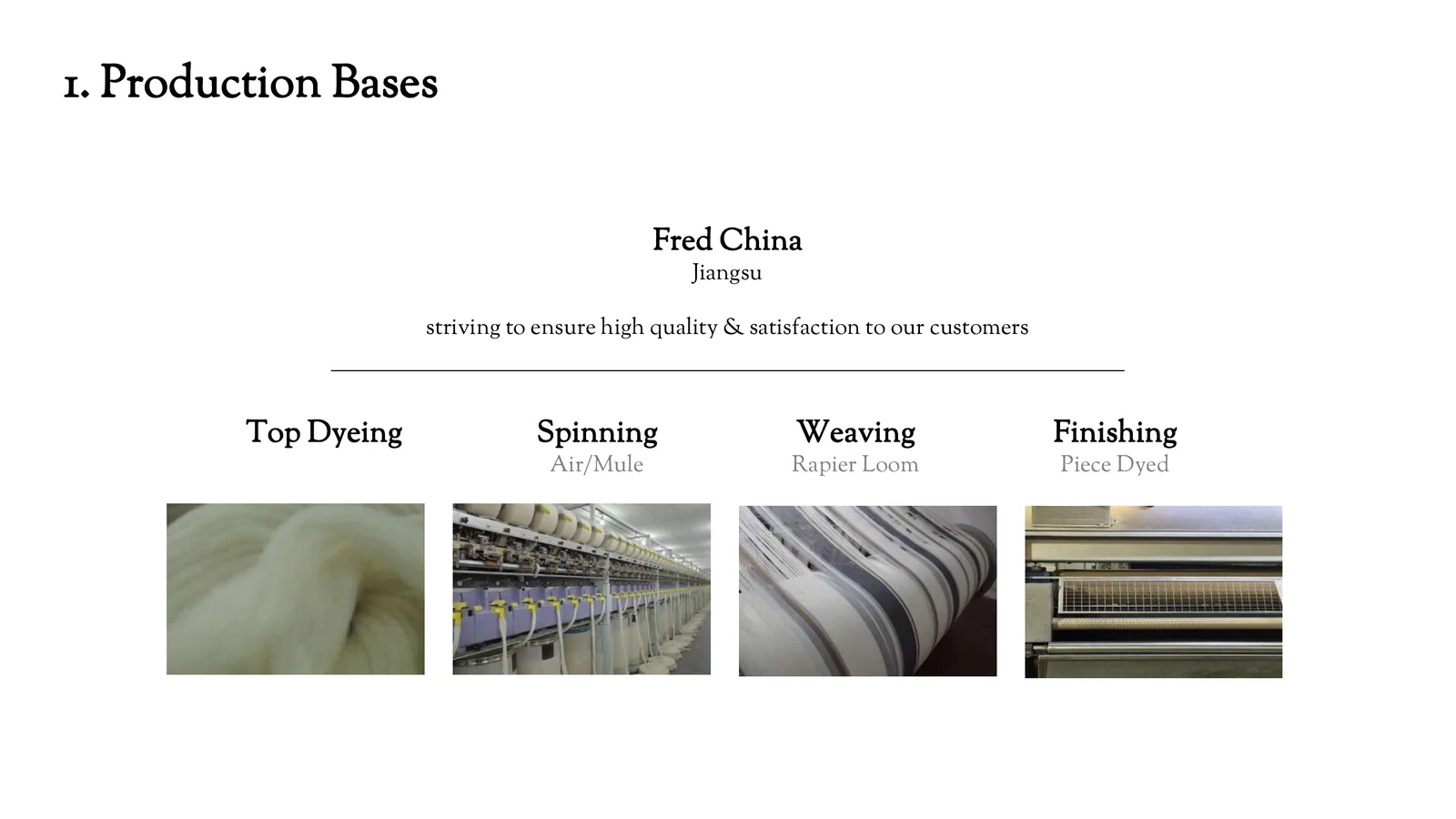
A production-route diagram shows where fibre moves into yarn and woven fabric, but it does not establish the fibre declaration of a specific order. For a selected wool, recycled or blended direction, specify composition, accepted tolerance, colour, yarn route, surface, test need and any claim wording. Preserve the connection between the source reference, the physical sample and the eventual production records.
This prevents a common sourcing error: using one fibre description as if it predicted all handfeel, pilling, strength, colour and finish outcomes. Ask Fred Textile which construction and finishing route is proposed for the actual garment brief.
Raw materials connected to Fred Textile production
Fred Textile can discuss virgin, recycled and specialty-fibre directions within the proposed woolen fabric program. Buyers should connect composition, fineness, material origin and certification wording to the actual spinning, weaving and finishing route.
Our integrated scope covers top dyeing, spinning, weaving, finishing, inspection and shipment coordination. Collection directions include classic woolen styles, firm single-faced blends, double-faced constructions, hairy special programs and recycled-material development.
Prepare colour and blended fibre direction before yarn formation.
Air and mule spinning support woolen and blended yarn preparation.
Build solids, checks, herringbones and structured woven constructions.
Develop piece-dyed colour, surface, handfeel and dimensional result.
Review colour, appearance, handfeel and agreed measurable controls.
Coordinate final inspection, order records and shipment arrangement.
Source boundary: capacity, staffing, investment and operating-day figures above are the published company-profile snapshot. Available capacity, construction, tests, certification scope, MOQ, price and lead time must be confirmed for the actual order.
Use the guides to prepare the brief
The public collection library covers classic woolen styles, single-faced and double-faced blended weaves, hairy fibre directions and recycled-material programs.