Sourcing & Ordering
Wool Fabric Samples: What to Request Before a Bulk Order
Which samples should a buyer request before bulk production?
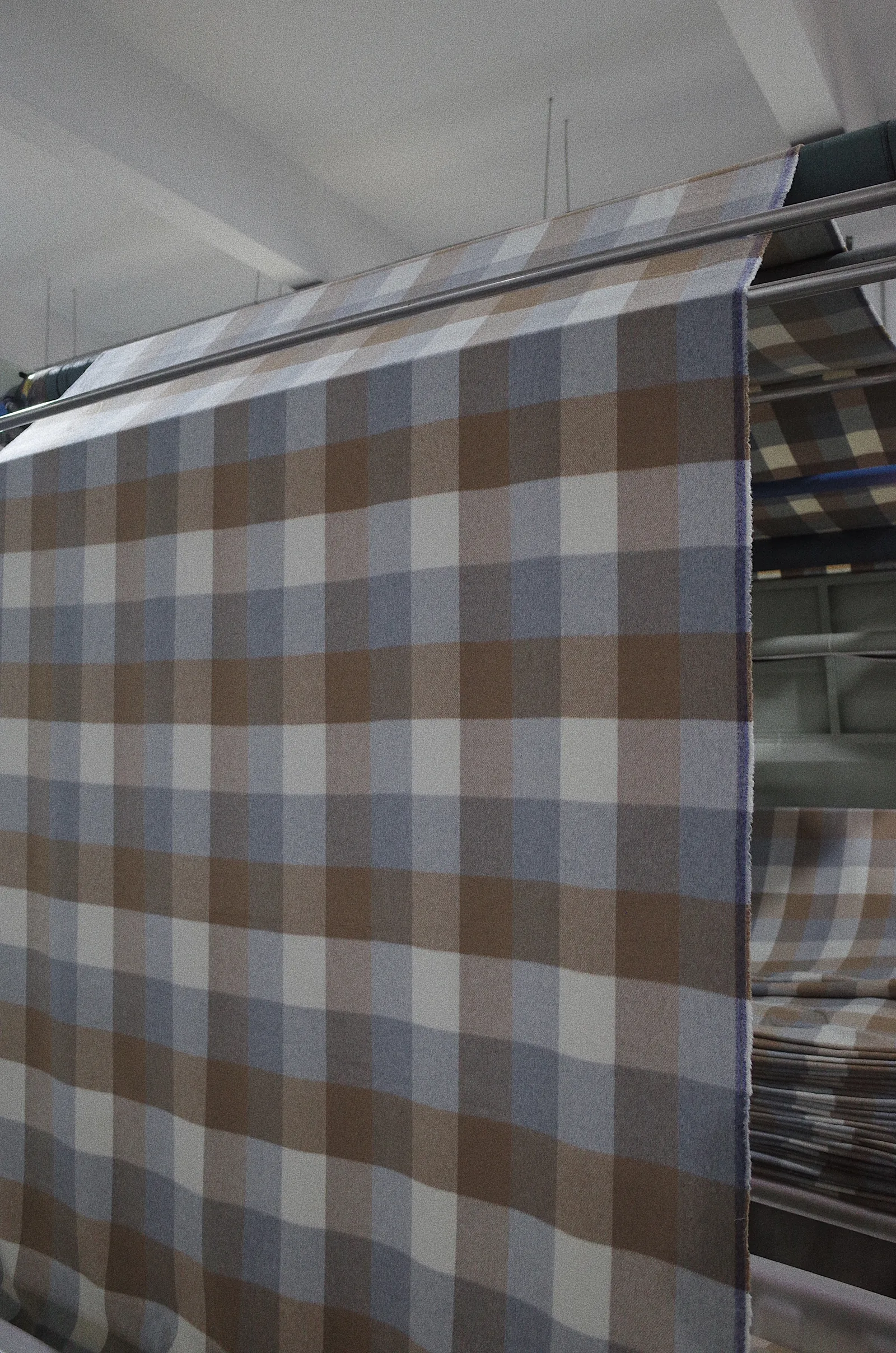
A swatch looks right. What has it actually proved?
A small swatch helps shortlist colour and handle. It cannot establish usable width, cutting yield or the behaviour of a finished coat. Request the next sample according to the decision you need to make, not simply a larger piece of the same cloth.
Select the sample for the job
Use a hanger to compare appearance; ask for a full-width cutting to inspect edge-to-centre shade and pattern repeat. For a sewing trial, give the pattern, size range and number of trial garments so the required length can be agreed. Do not assume a standard free sample quantity.
Label what was and was not approved
Record fabric reference, face, nap direction, colour, finish and sample date. Separate colour approval from handle approval. If the cutting came from a showroom or a special sample finish, ask what differs from the proposed production route.
Keep a bridge to bulk production
Retain matching approved pieces with buyer, Fred Textile and the garment maker. Before bulk cutting, compare a production-representative sample with that reference under the same conditions. A new finishing route needs a new check even if its article number is unchanged.
When can the order move forward?
Proceed when the written approval identifies the sample, accepted properties, unresolved points and who can release production. A parcel receipt, photograph or colour-only approval is not blanket approval of the fabric.
Fred Textile
Send Fred Textile your garment use, reference image or cutting, required trial length, colours, quantities and destination. Ask for sample availability, charges and timing for that exact request.
mrkcal@fredtextile.comPractical sourcing decision
Which sample should you request next?
Choose the sample stage from the decision you need to make. A small swatch helps narrow surface and colour direction; a larger cutting helps test the garment. Neither automatically represents the eventual bulk lot. Record the sample identity, construction and finish so comments on one stage are not transferred to a different fabric.
| Decision | Option or check | What to compare |
|---|---|---|
| Choosing a material direction | Request relevant swatch cards and composition information. | Use these for shortlisting, not final sewing approval. |
| Testing a garment | Request enough finished cloth for the pattern and repeats. | Include lining, interlining, seam and pressing trials. |
| Releasing bulk production | Agree the production-representative sample and test evidence. | Keep a sealed reference with the approved revision. |
Put the decision into practice
Your request should state garment type, reference image or article number, target composition, weight unit, width, colours and expected bulk quantity. Also provide destination and required date. Ask Fred Textile to confirm sample availability, cutting size, charges and courier arrangements before treating the sample schedule as agreed.
Your next buying question
Discuss your fabric with Fred Textile
Send your reference, garment use, composition, finished weight and width, colour quantities and target delivery. Ask which sample and production route can be supported for your project.
mrkcal@fredtextile.comDecisions for this fabric question
- Handfeel and direction
- Colour and finish development
- Garment and bulk validation
Evidence and specification checklist
- Sample type and size
- Whether sample is production-representative
- Lead time and charge
- Approval status
Mistakes and practical controls
A showroom cutting is treated as bulk standard
Document its limitations
Sample yardage uses a special finish
Confirm production route
No retained standard exists
Seal and label approvals
Fred Textile
Fred Textile manufacturer context
Fred Textile is the operating brand of Fengruide (Suzhou) Textile Technology Co., Ltd., a woven woolen and blended fabric manufacturer in China. Composition, tests, certification scope, price, MOQ and delivery require written confirmation for the actual order.
FAQ
Practical buyer guide
Which samples should a buyer request before bulk production?+
Move from available swatch to development sample, lab dip, sample yardage and production approval as needed. Each stage answers a different question; a small hand sample cannot prove width, shade continuity or garment performance.
Which decisions change the right wool fabric sample order specification?+
The main decision variables are Handfeel and direction, Colour and finish development, Garment and bulk validation. Define them against the garment, wearing climate, care route and target market before comparing samples. A supplier should explain how the proposed construction and finish deliver those outcomes, and the buyer should retain a conditioned physical reference for bulk comparison.
What should an RFQ and bulk approval include for wool fabric sample order?+
Include Sample type and size, Whether sample is production-representative, Lead time and charge, Approval status. State the test or inspection method, unit, tolerance, sample stage, quantity by colour, intended garment and approval owner. Before bulk release, review these predictable risks: A showroom cutting is treated as bulk standard: Document its limitations. Sample yardage uses a special finish: Confirm production route. No retained standard exists: Seal and label approvals.