woolen yarn count guide
Woolen Yarn Count Guide for Fabric Buyers
Yarn count describes linear density only when the count system, single or folded form and moisture basis are clear. Buyers should use it with fib…
↗Build performance into the cloth
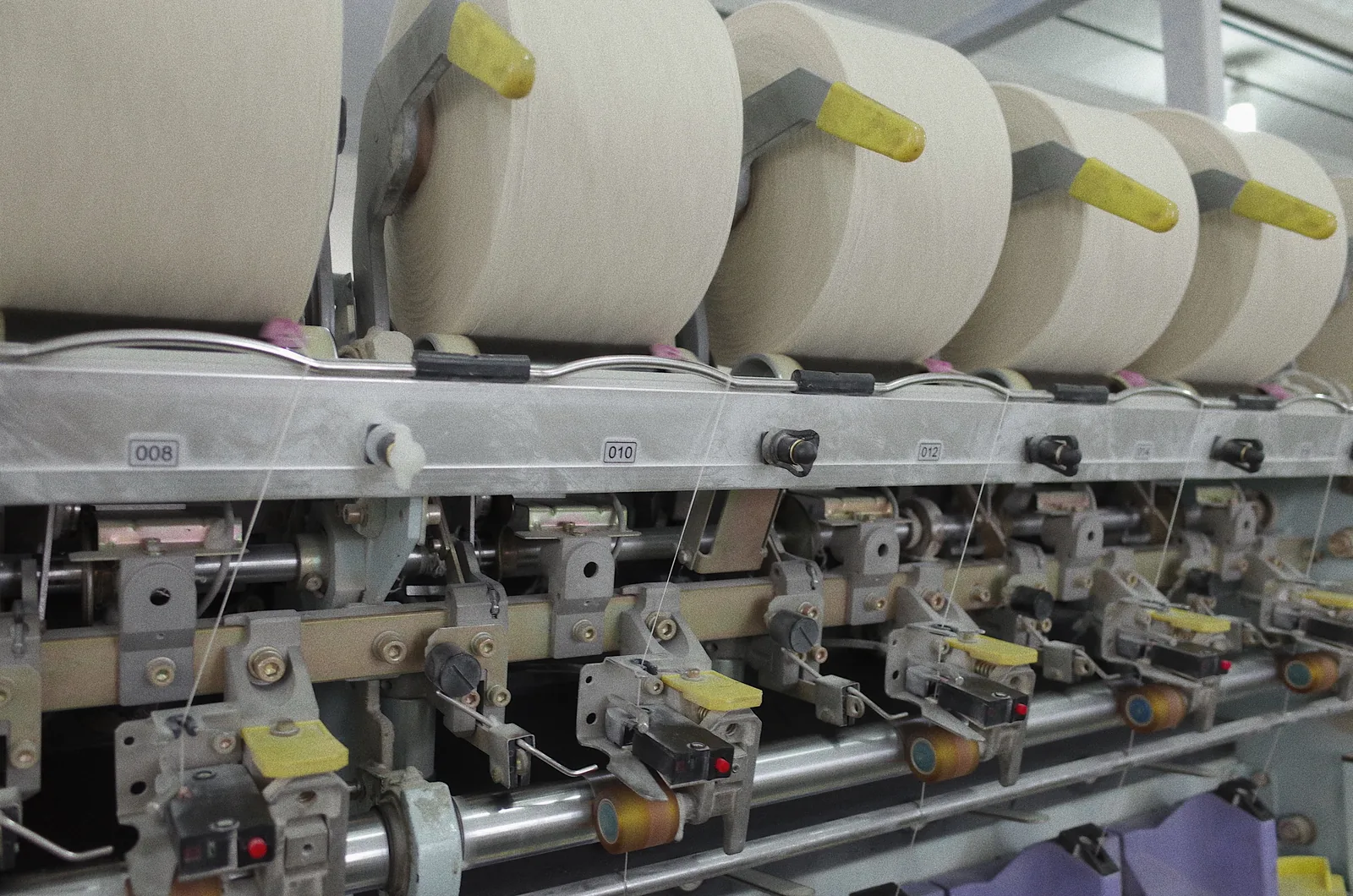
Understand woolen yarn count, twist, ply, fancy yarns, warp and weft density, woven structures and how construction controls surface, stability and drape.
28 focused questions in this cluster
Recommended decision path
Each question can stand alone, but these four gates keep sample enthusiasm from outrunning a measurable bulk plan.
Record the decision, responsible party and evidence before moving to the next gate.
Record the decision, responsible party and evidence before moving to the next gate.
Record the decision, responsible party and evidence before moving to the next gate.
Record the decision, responsible party and evidence before moving to the next gate.
Question library
woolen yarn count guide
Yarn count describes linear density only when the count system, single or folded form and moisture basis are clear. Buyers should use it with fib…
↗single vs ply wool yarn
Single yarn can support softness and lively surface, while folded yarn may improve regularity, strength or definition depending on twist and fibr…
↗air spun vs mule spun wool
Compare the routes through the required yarn character, regularity, bulk, surface and achievable fabric finish. Fred Textile publishes both air a…
↗carded wool yarn quality
Carded wool yarn consistency depends on fibre preparation, blending, count, twist, evenness and contamination control. Buyers can specify the fin…
↗wool yarn twist fabric
Twist influences yarn strength, compactness, hairiness, drape and the way finishing opens or closes the surface. Buyers should approve the final…
↗fancy yarn wool fabric
Retain a yarn reference and define the visible effect, colour placement, repeatability, snagging and ground support. Fancy-yarn variation may be…
↗slub wool yarn fabric
Define slub length, thickness, frequency, colour contrast and whether the effect belongs in warp, weft or both. Approve full-width metreage becau…
↗boucle loop yarn control
Control loop size, loop security, core yarn, effect-yarn distribution and the stability of the woven ground. The approved standard should show ac…
↗warp weft density wool fabric
Warp and weft density help explain cover, stability, weight, seam behaviour and pattern scale, but values must state the measurement distance and…
↗plain weave wool fabric
Plain weave can provide a balanced, stable base, but yarn character, density and finish determine whether it feels crisp, lofty, open or compact.…
↗twill weave wool fabric
State twill direction, scale, face prominence, yarn contrast and the target drape or strength. Finishing can soften or obscure the diagonal, so a…
↗basket weave wool fabric
Basket constructions can create visual depth and soft drape, but grouped yarns may increase snagging, distortion or seam movement when the weave…
↗double weave wool fabric
Define both layers, their connection, face relationship, total weight and intended edge or separation technique. A double weave must be judged as…
↗jacquard wool fabric
Include artwork, repeat dimensions, colour and yarn map, face and reverse expectations, density, width and finish. Approve a representative woven…
↗wool fabric usable width selvedge
Distinguish total width from the edge-to-edge area that can actually be cut without defects, tension marks or unsuitable selvedge. State the meas…
↗yarn dyed vs piece dyed wool fabric
Choose yarn dyeing when colour placement, mélange or woven pattern requires coloured yarns; choose piece dyeing when a suitable construction can…
↗wool yarn count unit comparison
No. Identify the count system, single or folded yarn basis and ply before comparing values or making a conversion. Ask for a consistent technical…
↗wool fabric warp weft substitution
Identify the substituted direction, yarn character and unchanged construction fields, then compare finished cloth rather than assuming a one-dire…
↗wool fabric long floats snagging
Inspect both faces and exposed garment contact zones, then trial representative finished fabric under the relevant handling or wear conditions. F…
↗wool fabric edge centre density difference
Compare finished specimens from left, centre and right using the same conditioning and direction. Review yarn density, finish and tension-related…
↗wool fabric yarn density GSM mismatch
Review the count basis, ply, warp and weft density, crimp, composition and dimensional change during finishing. Compare finished weight on condit…
↗wool fabric same pattern different weave
A similar visual repeat can conceal different floats, density and yarn interlacing. Compare the technical construction and finished physical refe…
↗wool fabric yarn twist direction
Include it when the yarn route or observed construction behaviour makes it relevant, alongside twist level, ply and yarn placement. Do not diagno…
↗wool fabric fancy yarn consistency
Retain a representative appearance range showing acceptable effect frequency, size and distribution on finished fabric. Distinguish designed irre…
↗wool fabric yarn package colour mixup
Compare the approved yarn-colour sequence with package IDs, loom allocation and greige evidence before reviewing dye or finishing explanations. R…
↗greige vs finished wool fabric approval
Greige can support construction or pattern review within its stated scope, but it does not establish final shade, handfeel, usable width, care st…
↗wool fabric selvedge tension puckering
Compare relaxed full-width fabric with the edge and centre identified, and record whether puckering enters the usable zone. Ask the mill to revie…
↗wool fabric construction sheet revision
Assign a revision, date and approval owner to yarn, weave, density and finishing references. Link sample approvals and the purchase order to that…
↗
Search intent: turn a reference into a controlled brief
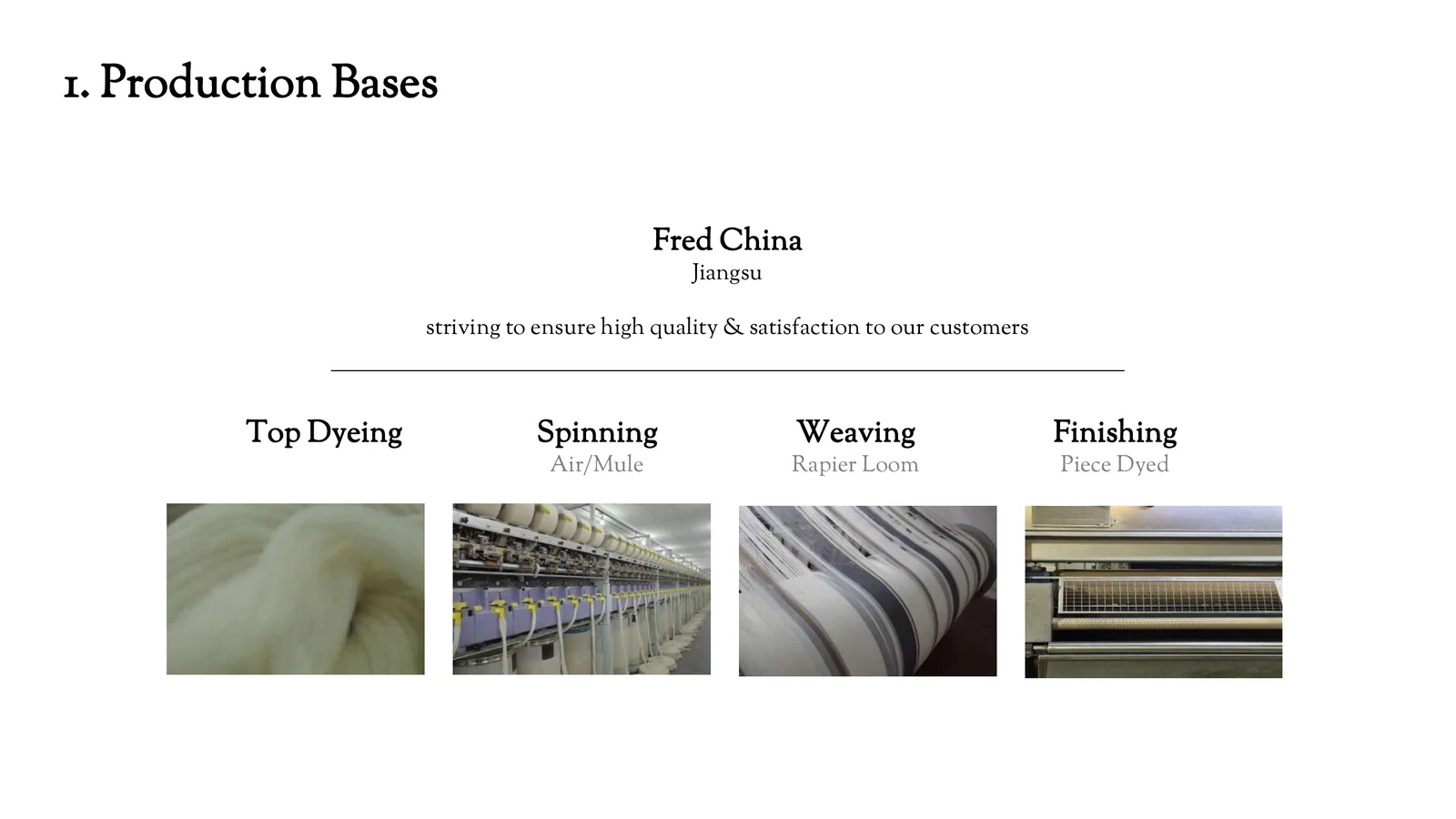
Top dyeing, spinning, weaving and finishing are sequential decisions, not interchangeable labels. A fabric board may show the desired colour and surface, while yarn count, twist, ply, weave, density and finish determine how that appearance is built and how stable it remains. Ask for a controlled description of the proposed route before treating two swatches as equivalent.
For checks, herringbones and textured woolens, review a full-width woven trial and the final surface—not only yarn cards or screen artwork. This gives Fred Textile and the buyer a shared reference before the order reaches production.
Yarn and weave decisions inside Fred Textile production
Fred Textile links woolen spinning, yarn preparation and rapier weaving to the required surface, weight, stability and pattern. Yarn count, twist, ply, density and weave should be reviewed as one production system.
Our integrated scope covers top dyeing, spinning, weaving, finishing, inspection and shipment coordination. Collection directions include classic woolen styles, firm single-faced blends, double-faced constructions, hairy special programs and recycled-material development.
Prepare colour and blended fibre direction before yarn formation.
Air and mule spinning support woolen and blended yarn preparation.
Build solids, checks, herringbones and structured woven constructions.
Develop piece-dyed colour, surface, handfeel and dimensional result.
Review colour, appearance, handfeel and agreed measurable controls.
Coordinate final inspection, order records and shipment arrangement.
Source boundary: capacity, staffing, investment and operating-day figures above are the published company-profile snapshot. Available capacity, construction, tests, certification scope, MOQ, price and lead time must be confirmed for the actual order.
Use the guides to prepare the brief
The Fred Textile factory route covers top dyeing, air and mule spinning, rapier weaving, piece-dyed finishing, inspection and shipment coordination. Capacity and production availability must be confirmed for the proposed construction and order schedule.