dry clean only wool fabric
Dry-Clean-Only Wool Fabric Buyer Guide
Base the decision on shell, lining, interlining, trims, colour, finish and complete garment testing rather than wool content alone. The care labe…
↗Design for life after delivery
Plan dry cleaning, washable-wool care, pressing, storage, warmth, breathability, abrasion, recovery and functional finishes around the real garment use.
36 focused questions in this cluster
Recommended decision path
Each question can stand alone, but these four gates keep sample enthusiasm from outrunning a measurable bulk plan.
Record the decision, responsible party and evidence before moving to the next gate.
Record the decision, responsible party and evidence before moving to the next gate.
Record the decision, responsible party and evidence before moving to the next gate.
Record the decision, responsible party and evidence before moving to the next gate.
Question library
dry clean only wool fabric
Base the decision on shell, lining, interlining, trims, colour, finish and complete garment testing rather than wool content alone. The care labe…
↗washable wool fabric
Define the wash, dry and cycle conditions, then test dimensional change, felting, appearance, colour, pilling, seams and the complete garment. A…
↗wool fabric care label testing
Start with likely consumer and professional-care routes, destination rules and garment components, then select methods that evaluate dimensions,…
↗steam pressing wool fabric
Steam, heat, pressure and vacuum can relax, shrink, flatten, glaze or reshape wool fabric depending on construction and finish. Test the producti…
↗ironing temperature wool fabric
Use the lowest effective temperature, suitable moisture and protective technique validated on the actual shade, finish and garment build. Direct…
↗wool fabric storage moth protection
Store clean, dry material in controlled conditions with good housekeeping, inventory rotation and packaging that prevents contamination without t…
↗wool fabric odor moisture
Wool can interact with moisture, but specific odor-control, wicking or comfort claims require defined methods and product evidence. Evaluate the…
↗wool fabric thermal insulation
Warmth depends on fibre, yarn, construction, thickness, density, trapped air, wind penetration, lining and garment fit. GSM alone cannot predict…
↗air permeability wool fabric
Use a named method and pressure difference, then interpret the result by garment climate, lining, construction and wind exposure. Very low airflo…
↗abrasion resistance wool fabric
Use abrasion evidence for trousers, uniforms, elbows, cuffs, bags or other high-contact uses, selecting a method and endpoint relevant to the pro…
↗wrinkle recovery wool fabric
Define the relevant crease or recovery method, conditioning and direction, then connect results to yarn, weave, finish, pressing and garment stru…
↗stain resistant wool fabric finish
Define the stains, finish chemistry or mechanism, application scope, handfeel, colour, care durability and required evidence. A broad stain-proof…
↗DWR durability on wool fabric
Distinguish surface repellency from waterproofness, name the test and grade, and evaluate handfeel, colour, breathability and care durability. Th…
↗anti static wool blend fabric
Static risk depends on fibre blend, humidity, finish, lining, footwear and use environment. Define the actual problem and choose a relevant metho…
↗lightfastness wool fabric
Consider prolonged retail display, uniforms, interiors, window exposure and pale or sensitive shades, then select an applicable light exposure me…
↗wool fabric wear pilling trial
Use a controlled garment or panel trial to observe real friction zones, fibre shedding, matting and appearance change, while documenting wearer,…
↗wool fabric wear trial contact zones
Map the location, contact material and usage conditions of pilling, flattening or abrasion, retaining unworn comparison cloth. Elbows, bag straps…
↗wool coat bag strap abrasion
Compare the intended fabric against representative strap or bag contact in a controlled wear trial. Record pressure, repeated movement and surfac…
↗wool fabric lining friction pilling
Inspect where the lining, seams or inner layers rub against the wool cloth. Compare worn and unworn assemblies and the intended garment fit. The…
↗wool fabric storage yellowing
Compare covered, exposed and retained sections with the original approval, noting packaging, light, moisture and storage history. Ask an appropri…
↗wool fabric window display fading
Define the expected display duration, light exposure and acceptable change separately from normal garment use. Review relevant colourfastness evi…
↗wool garment pressing after dry cleaning
Evaluate the complete cleaning and finishing sequence, not just the cleaning bath or solvent route. Check dimensions, seam relief, pile direction…
↗wool fabric pill removal effects
Assess the original surface change before any treatment, then trial an appropriate method on an inconspicuous or separate specimen. Removing surf…
↗wool garment conflicting care instructions
Compare the documented care evidence for the shell, lining, interlining, trims and assembled garment. Choose instructions supported by the comple…
↗wool fabric wear recovery humidity
Define the recovery period and environmental or conditioning conditions before comparing worn panels and reference cloth. Record the garment fit…
↗wool fabric seasonal reference archive
Label the approved final cloth with style, revision, colour, lot and approval scope, then store it using appropriate protection from contaminatio…
↗wool fabric perspiration contact assessment
Review the intended skin contact, garment zone, colour and adjacent components with a qualified laboratory. Select the relevant method and accept…
↗wool fabric rain spotting
Retain the affected cloth and compare a controlled wetting and drying trial with the original standard. Record water exposure, finish, lighting a…
↗wool fabric rubbing against leather
Examine which surface transfers colour or shows wear, retaining both contact materials. Review wet and dry contact conditions with a relevant lab…
↗wool fabric surface brushing recovery
Inspect the cloth construction and approved finish first, and trial a suitable technique on a separate specimen. Compare pile direction, colour a…
↗wool coat shell fabric versus garment tests
Review whether the claim concerns the cloth, a seam, a component or the complete garment. Fit, lining, closure and construction affect the final…
↗wool garment care trial repeatability
Record specimen and assembly identity, the exact procedure, number of cycles, finishing and conditioning before assessment. Retain photographs an…
↗wool fabric body oil marks
Record the garment contact zone and actual use, then compare untreated affected material with an appropriate controlled care trial. Confirm the c…
↗wool fabric finish retention after care
Identify the claimed property, exact finish and expected care sequence, then select relevant pre-care and post-care evidence. A softer handle aft…
↗wool fabric retail display handling
Compare contact, folding, hanger support and lighting exposure in a representative display trial. Separate compression, pilling and true colour c…
↗wool fabric claim photos lighting
Use consistent lighting, orientation, scale and sample identity, including a contextual view and detailed defect view. Retain original files and…
↗
Search intent: turn a reference into a controlled brief
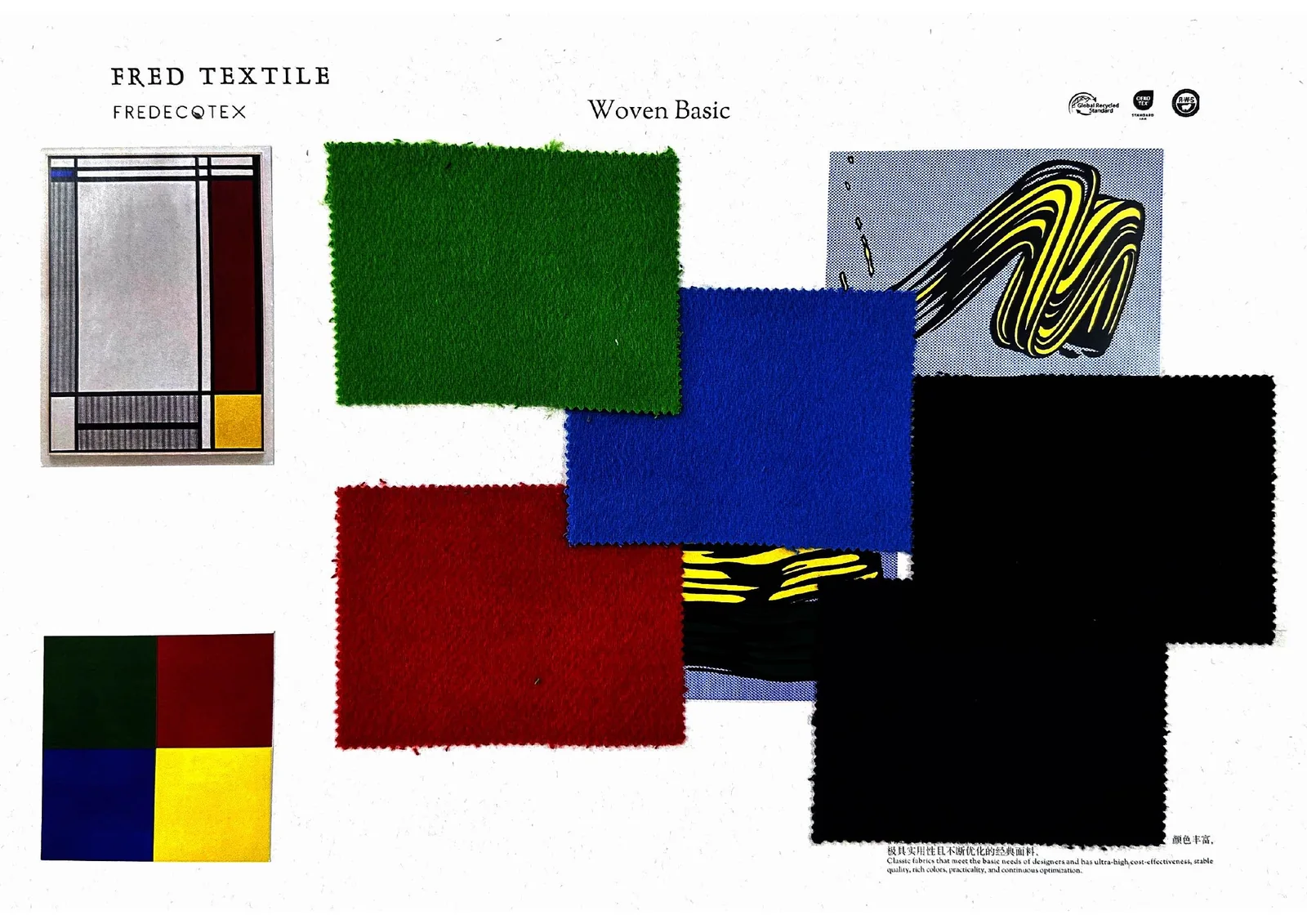
A fabric development board reveals real surface and colour relationships, but the wearer experiences the completed garment after cleaning, abrasion, pressing and storage. Select test methods from the garment’s care route and market, then compare the finished fabric and garment with the retained visual reference. This avoids declaring a colour or handfeel successful before its care and construction implications are understood.
Ask Fred Textile to discuss which fabric variables could affect the relevant outcome. Final performance wording, care labels and pass/fail limits need confirmation against the actual fabric and garment program.
Fred Textile fabric in real wear and care
Fred Textile can connect fibre, construction and finish to the intended dry-cleaning, pressing, warmth, breathability and wear brief. Final care wording and performance claims should follow the relevant finished-fabric and garment trials.
Our integrated scope covers top dyeing, spinning, weaving, finishing, inspection and shipment coordination. Collection directions include classic woolen styles, firm single-faced blends, double-faced constructions, hairy special programs and recycled-material development.
Prepare colour and blended fibre direction before yarn formation.
Air and mule spinning support woolen and blended yarn preparation.
Build solids, checks, herringbones and structured woven constructions.
Develop piece-dyed colour, surface, handfeel and dimensional result.
Review colour, appearance, handfeel and agreed measurable controls.
Coordinate final inspection, order records and shipment arrangement.
Source boundary: capacity, staffing, investment and operating-day figures above are the published company-profile snapshot. Available capacity, construction, tests, certification scope, MOQ, price and lead time must be confirmed for the actual order.
Use the guides to prepare the brief
The public collection library covers classic woolen styles, single-faced and double-faced blended weaves, hairy fibre directions and recycled-material programs.