Manufacturing & Finishing
Fulling and Milling Wool Fabric
What does milling do to woolen fabric?
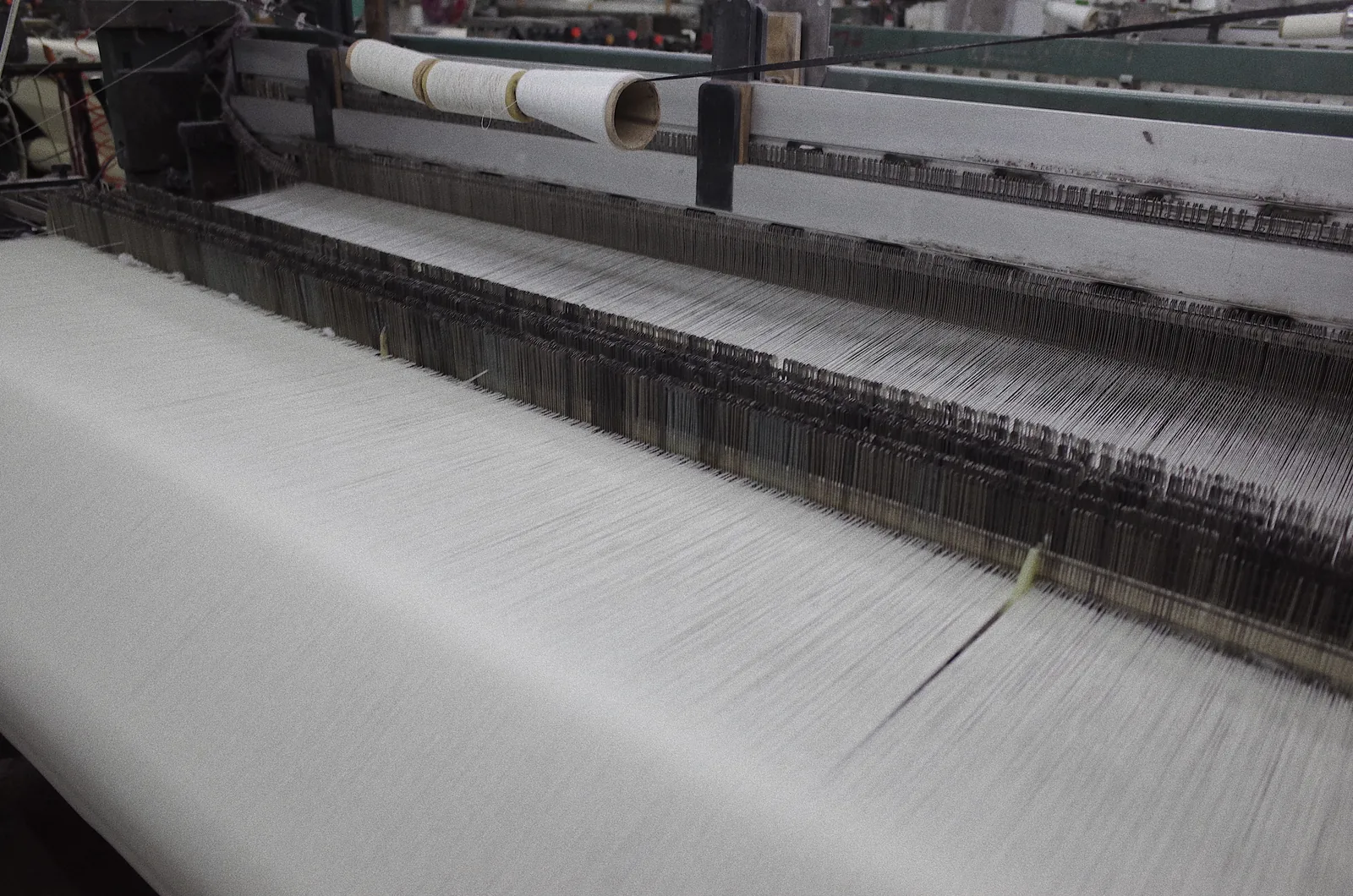
The answer in one minute
Controlled moisture, heat and mechanical action encourage wool fibres to interlock, increasing cover and compactness. Too little milling leaves an open cloth; too much can reduce width, harden handfeel or distort dimensions.
01Desired cover
02Width and weight change
03Softness versus compactness
01 · Define the buyer decision
What must be decided before you compare suppliers
The phrase wool fabric milling process can describe several constructions, finish levels or commercial assumptions. Use the following three gates to keep samples and quotations tied to the same end use.
Desired cover
Desired cover is not a decorative note; it changes the practical definition of wool fabric milling process. Describe the intended garment, wearer, selling climate and visual reference before using this phrase in an enquiry. Ask the supplier to connect the proposed fibre, yarn, construction and finish to the result rather than confirming the name alone.
Width and weight change
Width and weight change is not a decorative note; it changes the practical definition of wool fabric milling process. Compare this variable on conditioned physical cuttings under the same light and handling conditions. Record what is acceptable, what is merely preferred and what would cause rejection so the development team and production team work to one standard.
Softness versus compactness
Softness versus compactness is not a decorative note; it changes the practical definition of wool fabric milling process. Test the choice in the actual garment build. Cutting, fusing, pressing, lining, seam construction and care can reveal a mismatch that is not obvious in a small swatch, so keep approval open until the relevant making trial is complete.
03 · Make the request comparable
RFQ and specification checklist
Put each point in the written enquiry. Ask whether a quoted figure is a nominal target, a guaranteed range or a result from the actual production-representative sample.
Pre- and post-finish dimensions
For Pre- and post-finish dimensions, name the unit and whether the figure is a nominal target, an acceptable range or a guaranteed minimum or maximum. if a test is involved, identify the method, conditioning and specimen direction.
Target surface and handfeel
For Target surface and handfeel, tie the requirement to an approved cutting or production-representative sample. written numbers help comparison, but the retained reference controls appearance, surface and hand that a short description cannot fully capture.
Shrinkage controls
For Shrinkage controls, state when this point is checked: development sample, lab approval, pre-production lot, first bulk roll or final inspection. also name who can approve a deviation and how the decision is recorded.
Bulk recipe change rules
For Bulk recipe change rules, ask the supplier to disclose any construction, finish or process assumption behind the quoted result. a compliant number can still describe the wrong fabric if the end use and evaluation conditions are missing.
Include the garment, selling market, wear climate, care route, order quantity by colour, delivery location and target schedule. Separate mandatory thresholds from preferences. Ask the mill to show any assumption used in the quotation. A technically precise fabric can still be wrong for the commercial program when a specification has no end-use context.
04 · Control the approval path
A four-stage working method
- 01
Identify the process that creates the feature
Record the sample identity, method, result, photographs, comments and approval owner. The next stage should inherit the same definition of acceptable. If a deviation is accepted, write its scope and whether the same exception may appear in bulk or repeat orders.
- 02
Control inputs and stage records
Record the sample identity, method, result, photographs, comments and approval owner. The next stage should inherit the same definition of acceptable. If a deviation is accepted, write its scope and whether the same exception may appear in bulk or repeat orders.
- 03
Inspect before defects are concealed
Record the sample identity, method, result, photographs, comments and approval owner. The next stage should inherit the same definition of acceptable. If a deviation is accepted, write its scope and whether the same exception may appear in bulk or repeat orders.
- 04
Approve final finish and performance together
Record the sample identity, method, result, photographs, comments and approval owner. The next stage should inherit the same definition of acceptable. If a deviation is accepted, write its scope and whether the same exception may appear in bulk or repeat orders.
05 · Prevent predictable failure
Common risks and practical corrections
Over-milling creates a boardy fabric
Map the affected sample or lot, reproduce the observation under agreed conditions and separate the visible symptom from the stage that caused it.
Approve handle and bend. Trial the action on a limited quantity, then retest appearance, dimensions, colour and end-use performance before releasing the remaining material.
Width falls below the marker need
Map the affected sample or lot, reproduce the observation under agreed conditions and separate the visible symptom from the stage that caused it.
Track process loss. Trial the action on a limited quantity, then retest appearance, dimensions, colour and end-use performance before releasing the remaining material.
Uneven action causes patchiness
Map the affected sample or lot, reproduce the observation under agreed conditions and separate the visible symptom from the stage that caused it.
Inspect across width. Trial the action on a limited quantity, then retest appearance, dimensions, colour and end-use performance before releasing the remaining material.
06 · Ask the supplier better questions
Eight questions worth sending with the enquiry
Use these questions as a conversation guide, then convert agreed answers into the quotation, specification, sample record or contract. A sales reply is useful context; it is not the same as controlled order evidence.
- 01
How will you control desired cover from sample to bulk?
The answer should identify the material or process variable, the approval reference and the production check—not only say that it is possible.
- 02
How will you control width and weight change from sample to bulk?
The answer should identify the material or process variable, the approval reference and the production check—not only say that it is possible.
- 03
How will you control softness versus compactness from sample to bulk?
The answer should identify the material or process variable, the approval reference and the production check—not only say that it is possible.
- 04
What method, tolerance and evidence will you use for pre- and post-finish dimensions?
This makes quotations and later inspection results comparable and exposes assumptions before they become a claim dispute.
- 05
What method, tolerance and evidence will you use for target surface and handfeel?
This makes quotations and later inspection results comparable and exposes assumptions before they become a claim dispute.
- 06
What method, tolerance and evidence will you use for shrinkage controls?
This makes quotations and later inspection results comparable and exposes assumptions before they become a claim dispute.
- 07
What method, tolerance and evidence will you use for bulk recipe change rules?
This makes quotations and later inspection results comparable and exposes assumptions before they become a claim dispute.
- 08
Which part of this program is made in-house and which part may be subcontracted?
The real production route determines lead time, traceability, corrective action and which facility evidence is relevant.
07 · Turn the discussion into evidence
A practical order file for wool fabric milling process
Good sourcing control is not one long email. It is a small set of linked records that survives staff changes, sample revisions and production pressure. The following structure keeps the technical answer, commercial decision and physical fabric reference together.
We are developing wool fabric milling process for a defined garment and selling market. Our key decisions are Desired cover, Width and weight change, Softness versus compactness. Please propose a construction and finish, explain any assumptions, and quote against these controlled points: Pre- and post-finish dimensions, Target surface and handfeel, Shrinkage controls, Bulk recipe change rules. Identify the sample route, bulk approval stage, production role, quantity assumptions and delivery basis.
Project brief and physical references
Record the garment, market, season, care route, quantity by colour and delivery milestone. Attach photographs and identify the actual swatch or garment reference. For wool fabric milling process, write the three decision variables explicitly: Desired cover, Width and weight change, Softness versus compactness. State which points are mandatory and which may be adjusted after discussion with the mill.
Controlled technical specification
Keep one revision-controlled sheet covering Pre- and post-finish dimensions, Target surface and handfeel, Shrinkage controls, Bulk recipe change rules. Each entry should show a target, tolerance, unit, method and stage of approval where relevant. Do not paste a previous style specification without checking whether the construction, finish, care route and selling market are still the same.
Sample and approval trail
Give every submission a date and identifier. Retain the approved cutting in suitable conditions, and record comments, test results, deviations and the person authorized to approve. When a later sample replaces an earlier one, mark the superseded reference clearly so production, buying and quality teams do not use different standards.
Risk register and corrective trials
Track the risks most relevant to this guide: Over-milling creates a boardy fabric, Width falls below the marker need, Uneven action causes patchiness. Define the signal that triggers investigation, the material placed on hold, the person responsible and the evidence required for release. A correction should be trialled on limited material and checked for unintended changes before it is applied to bulk.
Bulk inspection and lot map
Connect roll numbers, dye or finish lots and inspection results to the shipment. Measure enough positions to understand within-roll and between-roll variation instead of relying on one average. Photograph important appearance findings under agreed light and direction, then record accepted segregation, repair, replacement or concession decisions before cutting starts.
Commercial release and repeat-order note
Link the technical release to quantity, packing, documents, delivery terms and the approved shipment plan. Preserve the final specification, approved reference and agreed exceptions for repeats, but ask the supplier to reconfirm raw material, colour and process continuity. A repeat purchase order does not automatically guarantee an identical result when inputs or conditions change.
08 · Direct Fred Textile factory context
Take this wool fabric milling process brief directly to the Fred Textile factory
Fred Textile is the operating brand of Fengruide (Suzhou) Textile Technology Co., Ltd., a woven woolen and blended fabric manufacturer in Zhangjiagang, Jiangsu, with manufacturing roots since 1995. Our published production scope connects top dyeing, air and mule spinning, rapier weaving, piece-dyed finishing, inspection and shipment coordination.
The Fred Textile factory route covers top dyeing, air and mule spinning, rapier weaving, piece-dyed finishing, inspection and shipment coordination. Capacity and production availability must be confirmed for the proposed construction and order schedule.
The Fred Textile factory profile is useful context, not a reservation of capacity or an unconditional product claim. Confirm composition, finish, test results, certificate scope, MOQ, price, lead time and delivery terms for the specific program.
09 · Working vocabulary
Terms to keep consistent across the order file
- Approved standard
- The identified physical cutting, colour reference or documented result used to judge later submissions and bulk.
- Tolerance
- The written range of variation accepted around a target, using an agreed method and unit.
- Production-representative sample
- A sample made with materials and processes close enough to bulk that its behaviour is meaningful for approval.
- Greige fabric
- Woven or knitted fabric before the wet and mechanical finishing that creates final width, hand and appearance.
- Process route
- The ordered sequence of fibre, yarn, weaving, dyeing, finishing and inspection stages used for the program.
- Recipe lock
- The controlled production settings and inputs retained after an approved result is achieved.
10 · Interpret the specification
How to turn four RFQ lines into enforceable controls
A specification becomes useful when the buyer, Fred Textile development team, production team and inspector can reach the same conclusion from the same evidence. The following interpretation notes connect each requested item to method, tolerance, sample identity and end-use consequence.
Pre- and post-finish dimensions
Write Pre- and post-finish dimensions as a controlled requirement for wool fabric milling process, not as an isolated number. Name the test or inspection method, conditioning state, unit, target and permitted range. Link the result to Desired cover so the mill understands which end-use decision the value protects. A quotation that only repeats a target without method, tolerance or sample identity is not yet comparable.
Target surface and handfeel
Ask the supplier to state whether Target surface and handfeel is nominal, typical, minimum, maximum or guaranteed for wool fabric milling process. Record where and how it is measured, how many specimens or rolls are checked and which approval sample carries the reference. Relate the answer to Width and weight change; this prevents a technically correct result from being accepted when it produces the wrong garment behaviour.
Shrinkage controls
For Shrinkage controls, separate the development target from the bulk acceptance rule. The sample may show direction, while production needs a defined tolerance, inspection frequency and escalation route. In a wool fabric milling process order, agree who can approve a deviation and whether it applies to one colour, one lot or every repeat. The commercial reason behind the control is Softness versus compactness.
Bulk recipe change rules
Keep Bulk recipe change rules in the same revision-controlled specification used for sampling, testing and final inspection. If the construction, finish, colour route or care assumption changes, review the value again rather than carrying it forward automatically. For wool fabric milling process, require the supplier to identify evidence before shipment and connect that evidence to Desired cover.
11 · Build a sample ladder
What each development gate should prove
A swatch, lab dip, handloom, metreage trial and production lot are not interchangeable. Name the purpose of each submission, the differences it is allowed to contain and the decision required before the next stage starts.
- 01
Identify the process that creates the feature
At this gate, define what the sample proves and what it does not prove. For wool fabric milling process, attach the sample code, construction, fibre declaration, colour route, finish route and the current value for Pre- and post-finish dimensions. Photograph both face and back under controlled light. The approval should identify whether the next sample may change handfeel, shade or performance and who owns that decision.
- 02
Control inputs and stage records
Use this stage to compare the actual sample with the written brief, not with memory or a phone image. Review Target surface and handfeel together with drape, surface, width and intended garment construction. For wool fabric milling process, retain one sealed reference and one working reference. If Width falls below the marker need appears, stop the ladder, isolate the cause and document the approved correction before advancing.
- 03
Inspect before defects are concealed
The representative sample should reflect the intended raw material, yarn, loom, colour and finishing route closely enough to predict production. Record any deliberate difference. For wool fabric milling process, confirm Shrinkage controls using the named method and compare all approved colourways under consistent conditions. A signed swatch without its specification revision cannot control a later bulk dispute.
- 04
Approve final finish and performance together
Before release, reconcile the sample, test report, inspection record, packing information and commercial order. Verify that Bulk recipe change rules still matches the approved basis for wool fabric milling process and that accepted exceptions are limited in writing. Review the prevention for Over-milling creates a boardy fabric across every affected colour and lot, then record who authorized shipment and which evidence was available.
12 · Apply the answer to a real program
Three sourcing scenarios that change the control plan
The same keyword can lead to very different work. Use the scenario closest to the order, then state which decisions, samples and records are mandatory for that route.
New fabric development
Start with the garment, customer, selling market, climate, care route and price architecture. For wool fabric milling process, convert Desired cover, Width and weight change, Softness versus compactness into a short development hierarchy: mandatory, negotiable and exploratory. Ask for one proposed route with assumptions instead of requesting many unlabelled samples. Evaluate the first sample as evidence for the brief, then update the specification before the next iteration. This keeps creative development open while preventing every attractive swatch from becoming a different commercial program.
Colour extension or repeat order
A previous approval is useful only when its raw material, construction, finish, shade standard, test basis and physical reference can still be identified. For a repeat wool fabric milling process program, list what must remain unchanged and what may be re-approved. Confirm yarn or fibre availability, new colour risks, current width and weight, care assumptions, packing and lead time. Treat any changed mill route, finish chemistry, source material or garment process as a controlled change requiring representative evidence rather than as an administrative repeat.
Multi-colour or multi-market program
Do not assume one approval covers every colour, destination or garment. Dark, bright, pale and melange shades may use different dye loads or reveal surface and fastness risks differently. Markets can also require different care, restricted-substance or labelling evidence. Build a matrix for wool fabric milling process that maps colour, quantity, destination, test requirement, approval owner and delivery window. Identify which controls apply to all variants and which need separate samples or reports, then quote and schedule against that matrix.
13 · Protect repeatability
Repeat-order and change-control protocol
A successful first order is evidence, not a permanent guarantee. Raw materials, colour routes, equipment, finishing conditions, test standards and garment assumptions can change. A concise change-control record protects both the buyer and Fred Textile by showing when re-approval is necessary.
Freeze the approved basis
Store the final specification, sealed fabric reference, approved colour standard, test reports, inspection level and packing instruction under one revision. For wool fabric milling process, the record should also show Pre- and post-finish dimensions, Target surface and handfeel, Shrinkage controls, Bulk recipe change rules. A repeat enquiry should cite that revision instead of relying on a style name or old purchase order alone.
Declare every proposed change
Require written notice before changing fibre source, yarn count or blend, weave settings, dye route, finishing sequence, usable width, weight, packaging or production site. The notice should explain the reason, affected quantities and expected effect on Desired cover, Width and weight change, Softness versus compactness. Silence is not approval; the buyer names the evidence needed to release the change.
Revalidate the affected controls
Do not repeat every test mechanically. Review the change and select the appearance, dimensional, colour, durability, garment-processing or documentation controls it can influence. Compare the proposed wool fabric milling process sample with both the numerical tolerance and the retained physical standard. Record any accepted difference with a boundary for colour, lot, order and future repeats.
Close the loop after delivery
Reconcile receiving lengths, roll identities, shade grouping, cutting observations, garment performance and claims with the shipment record. Feed verified results into the next brief. A repeat order becomes safer when the order history explains which controls worked, which variation was accepted and which corrective action must remain in the Fred Textile production and inspection route.
14 · Resolve problems with evidence
A claims file that supports correction, not argument
When a problem appears, speed matters, but an unstructured complaint can destroy the evidence needed to find the cause. Preserve identity and conditions first; then separate observation, requirement, cause, containment, correction and commercial resolution.
Over-milling creates a boardy fabric
Preserve the affected roll or sample identity, quantity, lot, colour, photographs, conditioning and observation conditions. Compare it with the approved wool fabric milling process reference and the written control for Pre- and post-finish dimensions. Reproduce the symptom under an agreed method, trace when it first appeared, and test the proposed correction on limited material. The intended prevention is: Approve handle and bend.
Width falls below the marker need
Preserve the affected roll or sample identity, quantity, lot, colour, photographs, conditioning and observation conditions. Compare it with the approved wool fabric milling process reference and the written control for Target surface and handfeel. Reproduce the symptom under an agreed method, trace when it first appeared, and test the proposed correction on limited material. The intended prevention is: Track process loss.
Uneven action causes patchiness
Preserve the affected roll or sample identity, quantity, lot, colour, photographs, conditioning and observation conditions. Compare it with the approved wool fabric milling process reference and the written control for Shrinkage controls. Reproduce the symptom under an agreed method, trace when it first appeared, and test the proposed correction on limited material. The intended prevention is: Inspect across width.
Commercial resolution record
Keep technical cause, affected quantity and commercial remedy in separate fields. Record whether material is usable as supplied, usable after sorting or rework, or unsuitable for the intended program. Name freight, reprocessing, replacement and timing responsibilities only after the evidence is agreed. Close the file with the corrective action, owner, due date and verification for the next wool fabric milling process order.
15 · Compare the commercial offer
Normalize quotations before negotiating the headline price
Two quotations can use the same product name while carrying different construction, test, quantity, timing and delivery assumptions. A fair comparison makes those assumptions visible, confirms the proposed fabric is suitable for the same garment program and leaves an auditable record of what was finally agreed.
Normalize the technical basis
Place every proposal for wool fabric milling process into one comparison sheet. Preserve the supplier wording, then add separate columns for construction, fibre composition and permitted variance, yarn route, finish route, usable width, weight, colour basis, test method and tolerance. Mark every blank as “not stated” instead of assuming it matches another quotation. A lower unit price cannot be compared until Pre- and post-finish dimensions, Target surface and handfeel, Shrinkage controls, Bulk recipe change rules refer to the same definitions and the same production-representative sample stage.
Separate price from quantity assumptions
Record currency, tax basis, trade term, packing, payment timing, quantity by colour, colour surcharge, sampling cost, test cost, inspection cost and freight separately. Ask which quantity determines the quoted rate and what happens when one colour falls below that level. For wool fabric milling process, distinguish a development minimum, a production minimum and an economic batch. This makes the commercial effect of Desired cover, Width and weight change, Softness versus compactness visible without inventing a price or treating an indicative quotation as a firm order commitment.
Make timing a dated route
Replace a single lead-time number with dated gates: complete brief received, raw material reserved, colour or lab approval, representative sample, bulk start, finishing, inspection, packing, ex-factory and delivery basis. Identify which dates depend on buyer approval and which depend on Fred Textile production. Add the allowed response time for shade, handfeel or performance comments. When an approval changes, recalculate the route in writing; do not keep an obsolete shipment date beside a revised wool fabric milling process specification.
Record the negotiated conclusion
Close the comparison with a written award basis: accepted specification revision, physical sample identity, approved colours, quantity, tolerance, tests, inspection, packing, trade term, payment, schedule and named contacts. List unresolved points and the event that will close each one. If an exception is accepted, state whether it applies to development, one bulk lot, one colour or future repeats. The final record should allow a colleague who did not attend the negotiation to understand exactly what Fred Textile is being asked to make and what evidence releases shipment.
Pause when a proposal for wool fabric milling process changes the requested composition, construction, width, weight or finish without explaining the effect; uses “standard” or “as sample” without identifying a standard or sample; provides one test figure without method, date or sample identity; combines several colour quantities to reach a minimum but does not explain the production plan; or promises a shipment date before approval gates are scheduled. Also clarify whether inspection covers every roll or a sample, whether quoted width is loom, finished or usable width, whether weight is nominal or tolerated, and whether packing and freight protect the agreed face, nap and roll condition. If a certificate or compliance statement affects the buying decision, request its current scope and order-level evidence rather than relying on a logo. Record the supplier answer beside the exact enquiry revision. An unresolved point can remain open during development, but it should have an owner, due date and consequence. Before purchase-order release, the open-point list should be empty or contain a written, limited exception approved by the responsible buyer. Review the quotation again after the approved sample because fibre availability, colour route, finish trials or testing may change cost and timing. Confirm that the final order uses the revised commercial basis and that any deposit or material reservation refers to that version. This discipline prevents a persuasive headline price from concealing a different product, test basis, quantity assumption or delivery obligation.
16 · Build proportionate evidence
A validation plan for wool fabric milling process
The final surface is the accumulated result of material preparation, yarn formation, weaving and finishing. A later process may conceal an earlier weakness temporarily, so stage records matter when investigating bulk variation. The plan below connects the buyer decision to sample identity, test method, bulk distribution and the authority to release material. It is intentionally narrower than a generic laboratory list and should be adjusted to the garment, market and consequence of failure.
Controlled moisture, heat and mechanical action encourage wool fibres to interlock, increasing cover and compactness. Too little milling leaves an open cloth; too much can reduce width, harden handfeel or distort dimensions. Use this direction when the buyer needs to understand which production stage creates the desired feature and which records can keep that feature stable from trial to bulk. Judge desired cover, width and weight change and softness versus compactness together. Do not treat a machine name or process label as proof of quality. Inputs, settings, sequence, lot control and inspection determine whether the route delivers the approved result. Choose another direction if the project cannot provide a representative use, physical reference and approval owner, or if over-milling creates a boardy fabric cannot be controlled on the proposed route.
Acceptance gates specific to this question
Development direction
The buyer supplies use and reference; Fred Textile records material and process assumptions. Compare pre- and post-finish dimensions with desired cover. Label every expected difference when the sample is directional rather than bulk evidence.
Representative sample
Use traceable material, yarn, construction, colour and finish. Named development and quality owners review target surface and handfeel and shrinkage controls. If over-milling creates a boardy fabric appears, stop, identify cause and document a limited corrective trial.
Bulk and roll review
Link roll, colour and lot identity to the approved sample and record bulk recipe change rules. If width falls below the marker need affects part of the lot, segregate it and authorize release, rework or replacement by identified quantity.
Shipment and repeat release
The named owner reconciles sample, exceptions, inspection, packing and shipment records. Unresolved uneven action causes patchiness requires written disposition. A repeat cites the approved revision and discloses changed inputs or processes.
Evidence sequence from direction to repeat order
Define the decision and the reference population
State exactly what the wool fabric milling process result will decide: development direction, supplier selection, colour approval, production release, shipment release or claim resolution. Record the garment, market, climate, care route, quantity by colour and expected delivery window. Then identify the population represented by the evidence: one hand sample, one trial length, one dye lot, selected rolls or the full shipment. This distinction matters because a beautiful cutting can demonstrate direction without proving bulk consistency. The three commercial decisions in this guide—Desired cover, Width and weight change, Softness versus compactness—should each have an owner, an approval stage and an identified record. If the evidence cannot support the intended decision, reduce the decision or obtain a more representative sample rather than treating uncertainty as acceptance.
Verify identity before interpreting performance
Confirm that every swatch, test report and roll record refers to the same proposed construction and revision. The identity file should include supplier or Fred Textile reference, fibre declaration, yarn and weave description where relevant, colour, finish route, nominal width and weight, sample date and lot or roll connection. For this program, reconcile Pre- and post-finish dimensions, Target surface and handfeel, Shrinkage controls, Bulk recipe change rules before comparing performance. A report from an earlier quality, a different colour or an unconditioned development cutting can be useful background, but it is not order evidence. Photograph face, back, selvedge and identifying labels, retain a sealed physical standard and mark superseded submissions. Identity control prevents technically valid results from being attached to the wrong fabric and makes later root-cause work much faster.
Build a proportional test and inspection plan
Choose controls from the end use and failure consequence instead of requesting every familiar textile test. Translate each requirement into method, conditioning, unit, target or limit, tolerance, number of specimens, location or direction, stage and responsible party. Use development testing to compare routes, production testing to confirm the approved route and inspection to understand lot distribution. When colours, fibre sources or finishes differ, decide whether the evidence can be shared or must be repeated. The plan should explicitly monitor Over-milling creates a boardy fabric, Width falls below the marker need and Uneven action causes patchiness. Agree what happens after a marginal result: retest, expanded sampling, segregation, corrective trial, concession or rejection. A test list without those decision rules creates data but does not control the order.
Compare numerical results with the physical standard
Numbers and samples answer different questions. Measurements can control composition, dimensions, strength, colour change or another defined property, while a conditioned cutting carries surface, drape, lustre, nap, fullness and overall visual balance. Review both under agreed light, direction and handling conditions. If a result is within tolerance but the cloth no longer supports Desired cover, Width and weight change, Softness versus compactness, investigate the construction or finish instead of accepting the number in isolation. If the physical standard varies naturally, define the acceptable range with boundary samples or written photographs rather than pretending one tiny area represents every metre. Record who compared the materials, when they were conditioned, which revision was used and whether the conclusion applies to all colours and lots or only to the specimens examined.
Release bulk with distribution evidence
Bulk approval should show both central tendency and variation. Map measurements and appearance findings to roll, lot, colour and position, then review within-roll and between-roll spread rather than one average. Confirm usable width, length basis, shade grouping, surface direction, packing and the final values for Pre- and post-finish dimensions, Target surface and handfeel, Shrinkage controls, Bulk recipe change rules. Link any repair, reprocessing, sorting or concession to the affected quantity and keep nonconforming material physically and digitally separated until disposition. The shipment release should cite the approved specification revision, retained sample, reports, inspection record, packing list and authorized exceptions. Preserve this package for receiving and repeat orders. It creates the evidence needed to distinguish production variation from transport, storage or garment-processing effects after delivery.
17 · Engineer value without silent substitution
Reduce cost while preserving the intended garment
A cost-down proposal is a new technical decision, not merely a lower number. The following alternatives are derived from this topic’s own decisions, specifications and failure modes. Keep the original construction, proposed change, expected consequence, representative sample and revised commercial basis in one controlled comparison.
Prioritize Desired cover
Make desired cover the first gate and use pre- and post-finish dimensions for comparison. This may require moderating width and weight change when one construction cannot maximize both. Reject the option if over-milling creates a boardy fabric cannot be prevented by the proposed control: Approve handle and bend. Compare physical samples that isolate this choice.
Balance Width and weight change with production stability
Use this route when width and weight change matters but production stability matters equally. Compare target surface and handfeel and shrinkage controls on representative material. A less extreme aesthetic may be preferable if it is inspectable and repeatable. If width falls below the marker need appears, require track process loss before advancing.
Protect Softness versus compactness at garment and bulk stage
Choose this alternative when softness versus compactness controls garment acceptance. Use bulk recipe change rules with the retained sample, and obtain representative metreage or a garment trial when needed. The route is unsuitable if uneven action causes patchiness remains after inspect across width. Limit any accepted compromise to the identified order, colour and lot.
Four controls for a defensible cost-down route
Protect the garment function before reducing cost
Begin value engineering by ranking the intended outcomes. Mark Desired cover, Width and weight change, Softness versus compactness as mandatory, preferred or exploratory, and explain the wearer or commercial consequence of each. Cost discussion should preserve mandatory outcomes first; otherwise two suppliers may quote different products under the same wool fabric milling process label. Ask the mill which fibre, yarn, weave, dye or finishing choices create each outcome and which inputs mainly add appearance, processing complexity or claim value. A lower price is useful only when the revised route still supports the garment, care label, market requirement and approved visual identity. Keep the original and proposed construction in one comparison, with the affected tests, sample gates, quantity assumptions and lead-time changes visible.
Change one controllable variable at a time
A simultaneous change to blend, yarn, density, width, weight and finish may reach a target price, but it removes the ability to understand why handfeel or performance changed. Build controlled alternatives: for example, adjust one material route while holding construction and finish, or adjust finishing intensity while keeping the base cloth. For each alternative, record the expected effect on Pre- and post-finish dimensions, Target surface and handfeel, Shrinkage controls, Bulk recipe change rules and the sample or test needed before comparison. Use conditioned full-size cuttings and, where relevant, garment components rather than relying on a sales swatch. If several changes must be combined for production reasons, request a clear before-and-after specification and treat the result as a new development route rather than an equivalent replacement.
Price variability and failure, not only metres
Calculate the operational cost of narrow usable width, shade segregation, high defect concentration, unstable relaxation, difficult pattern matching, extra inspection, slow approvals, special packing or uncertain documentation. A small metre price saving can disappear through marker loss, sorting, rework, delayed cutting or claims. The current risk list—Over-milling creates a boardy fabric, Width falls below the marker need and Uneven action causes patchiness—should therefore sit beside the quotation. Ask how the proposed route changes probability, detection and corrective options for each risk. Compare landed and usable cost on the same quantity, colour split, trade term, test scope and packing basis. Do not assign invented percentages; use the buyer's own consumption, labour, schedule and claim data to model the consequence.
Approve the compromise as a new controlled standard
Once an alternative is selected, replace exploratory language with a revised specification, sample identity and acceptance plan. State which visual, tactile, measurable and documentary differences are intentionally accepted and which remain prohibited. Recheck colour, construction, garment processing and care implications before using the former style name. For wool fabric milling process, repeat the relevant controls for Pre- and post-finish dimensions, Target surface and handfeel, Shrinkage controls, Bulk recipe change rules and retain both the original and revised references so future colleagues understand the trade-off. Update price, quantity, sample charges, testing, lead time and delivery basis at the same revision. Value engineering succeeds when the cheaper route is deliberately defined and repeatable—not when an unexplained substitute is accepted because the first cutting looked close enough.
Commercial drivers to normalize before price comparison
route-specific setup, trial material and the number of controlled process passes
This can change reservation, setup and production grouping. Keep price or minimum assumptions conditional on the actual article, colour plan and current availability.
batch continuity and the ability to combine or separate colours and lots
This changes the samples, approvals or controlled stages required. Put those gates on the dated route; timing remains conditional on the final specification and buyer responses.
rework, yield loss and schedule exposure when a late-stage finish must be corrected
This can alter usable metres, yield, inspection or delivery exposure. Compare the same usable-width, quality, packing and delivery basis and record any deviation.
18 · Transfer the approved route to production
Pre-production meeting agenda for Fred Textile and the buyer
Use this agenda after representative approval and before bulk commitment. It ties the written specification, physical reference, order terms and decision owners together so that development learning is not lost when the program moves into production.
- 01
Commercial scope and order identity
Confirm buyer style, supplier or Fred Textile reference, destination markets, quantity and tolerance by colour, unit basis, trade term, packing, delivery address and dated milestones. Identify the controlling purchase order and specification revision. Separate indicative plans from committed quantities and mark any material reservation or approval dependency. The meeting record should show who can change the order and how a change affects price or schedule.
- 02
Material, construction and usable dimensions
Review declared composition, fibre or yarn route, weave or construction, finished GSM, nominal and usable width, selvedge treatment and any directional face. Reconcile these points with the approved wool fabric milling process cutting and the controls for Pre- and post-finish dimensions, Target surface and handfeel, Shrinkage controls, Bulk recipe change rules. Name permitted production adjustments and changes that require a new representative sample. Confirm how rolls, lots and colour batches will remain traceable.
- 03
Colour, pattern, surface and finish
Place the approved colour standard, light sources, shade tolerance, face direction, pattern repeat and finish reference on the table. Confirm whether approvals are shared or separate by colour. Define full-width and length checks for shade, nap, check alignment or other visual features relevant to the program. Record the finishing sequence and process settings that must be protected after approval, plus the escalation route if bulk cannot match the retained reference.
- 04
Testing, inspection and release authority
List the required test methods, laboratories where applicable, sampling stage, report format, tolerance and person who reviews each result. Align roll inspection coverage, defect grading, shade grouping and measurement positions with the shipment-release decision. For the known risks—Over-milling creates a boardy fabric, Width falls below the marker need, Uneven action causes patchiness—state containment and expanded-inspection rules. No ambiguous result should be silently carried into packing; give it an owner and a dated closeout requirement.
- 05
Garment processing and end-use handover
Share relaxation, nap direction, pattern matching, marker, fusing, sewing, pressing, lining and care assumptions that could influence fabric acceptance. If the buyer has a garment trial, review its observations and photographs. Identify which cloth characteristics are intentionally preserved for appearance and which production controls protect cutting efficiency. A mill cannot control undisclosed garment settings, while a garment factory should not compensate for an unexplained fabric change without recording the decision.
- 06
Schedule, communication and exception closure
Convert the route into dated gates for raw material, colour, representative sample, test review, bulk start, finishing, inspection, packing and shipment. Show buyer-response deadlines and the consequence of missed approvals. Maintain one open-point list with question, owner, due date, evidence and decision. Close the meeting by distributing the record to buying, Fred Textile development, production, quality, garment and logistics contacts. Production release should cite the final closed revision, not informal messages sent afterwards.
19 · Follow one order from question to evidence
A worked control path for wool fabric milling process
This hypothetical walkthrough shows how the search question becomes an RFQ, how the sample improves the specification and how receiving data strengthens a repeat order. It is a control model, not a claim about an unidentified customer, completed production or guaranteed result.
Hypothetical procurement case — not a customer claim or production promise. Imagine a production and buying team tracing a desired fabric effect back to controllable stages working on a corporate or hospitality garment ordered in several colour groups for staged delivery. It treats desired cover as mandatory, width and weight change as negotiable and softness versus compactness as a garment review. It requests pre- and post-finish dimensions, target surface and handfeel, shrinkage controls and bulk recipe change rules without inventing a pass value. If over-milling creates a boardy fabric appears, it records approve handle and bend and checks the other risks. Commercial comparison stays conditional on colour quantities, samples, current material availability, usable yield, packing and delivery. The order file identifies route, reference, exceptions, approvers and shipment evidence; a repeat reopens every changed input or process.
Five decisions from search phrase to repeat order
- 01
1. Convert the search phrase into a garment brief
A buyer begins with “wool fabric milling process” but does not ask suppliers to price the phrase. The team records garment silhouette, selling climate, wearer, lining, care route, visual references, quantity by colour, target date and which of Desired cover, Width and weight change, Softness versus compactness are mandatory. This exposes disagreements inside the buyer team before samples arrive and lets Fred Textile propose one coherent material, construction and finishing direction.
- 02
2. Compare proposals on one technical basis
Each proposal is placed into the same table for Pre- and post-finish dimensions, Target surface and handfeel, Shrinkage controls, Bulk recipe change rules, with blanks marked as unstated. Fibre, yarn, construction, colour, finish, usable width, quantity basis, testing, approval stages, packing and delivery are separated from the headline metre price. The buyer asks suppliers to explain deviations and assumptions. Proposals that describe different fabrics remain alternatives rather than being ranked as though they were equivalent.
- 03
3. Use the sample to improve the specification
The first representative cutting is conditioned, photographed and reviewed under the intended light and direction. Numerical results and garment-making observations are added. If Over-milling creates a boardy fabric or another risk appears, the team isolates the variable, trials Approve handle and bend and checks for side effects. Approved findings replace vague words in the specification. The retained sample receives an identifier that also appears on the quotation and later bulk approval record.
- 04
4. Release production through dated gates
The pre-production record freezes the approved route, colours, tolerance, tests, inspection, packing and decision owners. Raw material and bulk dates are linked to buyer approvals. When an unavoidable change is proposed, production pauses only at the affected gate and presents representative evidence for re-approval. This avoids treating every adjustment as a crisis while preventing an unrecorded change from spreading across all colours or lots.
- 05
5. Reconcile receiving and feed the repeat order
At destination, roll numbers, lengths, shade groups, packing condition and documents are reconciled before cutting. Fabric is conditioned or relaxed as specified, and the garment factory records width, surface, marker, fusing, sewing and pressing observations against roll identity. Any claim preserves affected material and separates symptom, cause and remedy. The verified result, accepted exceptions and corrective actions are added to the next wool fabric milling process brief so a repeat order starts with evidence rather than memory.
Material–process–performance map
Raw material
Identify the incoming fibre or material condition that matters to this process and how it is separated, blended or released before production starts. Keep it consistent with desired cover and the declared basis for pre- and post-finish dimensions.
Yarn formation
Record yarn identity, count system, twist or effect, colour lot and any process-specific requirement that influences running behaviour and final surface. Check the effect on width and weight change and over-milling creates a boardy fabric.
Weaving and construction
Connect loom or construction settings to width, density, repeat and defect risk, and inspect the intermediate cloth before later finishing can conceal the cause. Link loom-state evidence to target surface and handfeel and shrinkage controls.
Colour route
Trace colour material, recipe or yarn placement to the relevant lot and verify changes under agreed viewing conditions before mixing production groups. Keep standard, sample and lot identity visible when reviewing softness versus compactness.
Finishing and release
Lock the approved sequence and evaluate side effects as well as the intended feature. More milling, raising, shearing or softening can improve one attribute while weakening another. Reconcile bulk recipe change rules with the prevention for uneven action causes patchiness.
20 · Protect the approved fabric after delivery
Receiving and cutting-room handover
Inspection and shipment release do not end fabric control. Receiving, conditioning, roll identity and garment-factory feedback determine whether an observation can be traced and whether the next order begins with reliable evidence.
Receiving identity and packing condition
Count packages and rolls against the packing list before removing identification. Photograph shipping marks, external damage, moisture concerns and roll-end labels. Connect supplier reference, buyer style, colour, lot, shade group, roll number, gross and net data, stated length and shipment document. Quarantine discrepancies without mixing affected material into normal storage. This first record establishes whether a later issue was visible at receipt or emerged after conditioning, handling or garment production.
Conditioning, relaxation and baseline measurement
Store and prepare the cloth according to the agreed care and production route. Let roll tension, moisture and temperature stabilize before deciding that width, weight, shade or surface is wrong. Measure representative positions and retain the link to roll identity. Compare Pre- and post-finish dimensions, Target surface and handfeel, Shrinkage controls, Bulk recipe change rules with the shipment report and approved reference. If the receiving result differs, agree a joint method before re-measuring so supplier and garment factory do not create conflicting data from different conditions.
Cutting-room and sewing feedback
Give the garment factory the approved face and direction, shade grouping, relaxation, marker, pattern-matching, fusing, sewing, pressing and care instructions relevant to wool fabric milling process. Ask operators to record observations by roll rather than sending a general complaint after garments are assembled. Capture usable-width loss, bow or skew, edge behavior, nap or pattern direction, ply stability, seam appearance and pressing response where relevant. Early roll-specific feedback allows material to be segregated and investigated before the entire order is cut.
Closeout, claim and repeat-order evidence
Reconcile fabric received, inspected, issued, cut, returned and remaining. Preserve samples from any disputed roll together with garment panels, settings, photographs and dates. Compare the observation with the exact specification and physical standard, then agree containment, cause, correction and commercial resolution as separate decisions. Close the file only when the action has an owner and verification. Carry the final roll map, accepted variation and prevention into repeat-order planning, while reconfirming material, colour, process and current Fred Textile capacity for the new schedule.
Frequently asked questions
Quick answers buyers can reuse
01What does milling do to woolen fabric?+
Controlled moisture, heat and mechanical action encourage wool fibres to interlock, increasing cover and compactness. Too little milling leaves an open cloth; too much can reduce width, harden handfeel or distort dimensions.
02Which decisions change the right wool fabric milling process specification?+
The main decision variables are Desired cover, Width and weight change, Softness versus compactness. Define them against the garment, wearing climate, care route and target market before comparing samples. A supplier should explain how the proposed construction and finish deliver those outcomes, and the buyer should retain a conditioned physical reference for bulk comparison.
03What should an RFQ and bulk approval include for wool fabric milling process?+
Include Pre- and post-finish dimensions, Target surface and handfeel, Shrinkage controls, Bulk recipe change rules. State the test or inspection method, unit, tolerance, sample stage, quantity by colour, intended garment and approval owner. Before bulk release, review these predictable risks: Over-milling creates a boardy fabric: Approve handle and bend. Width falls below the marker need: Track process loss. Uneven action causes patchiness: Inspect across width.